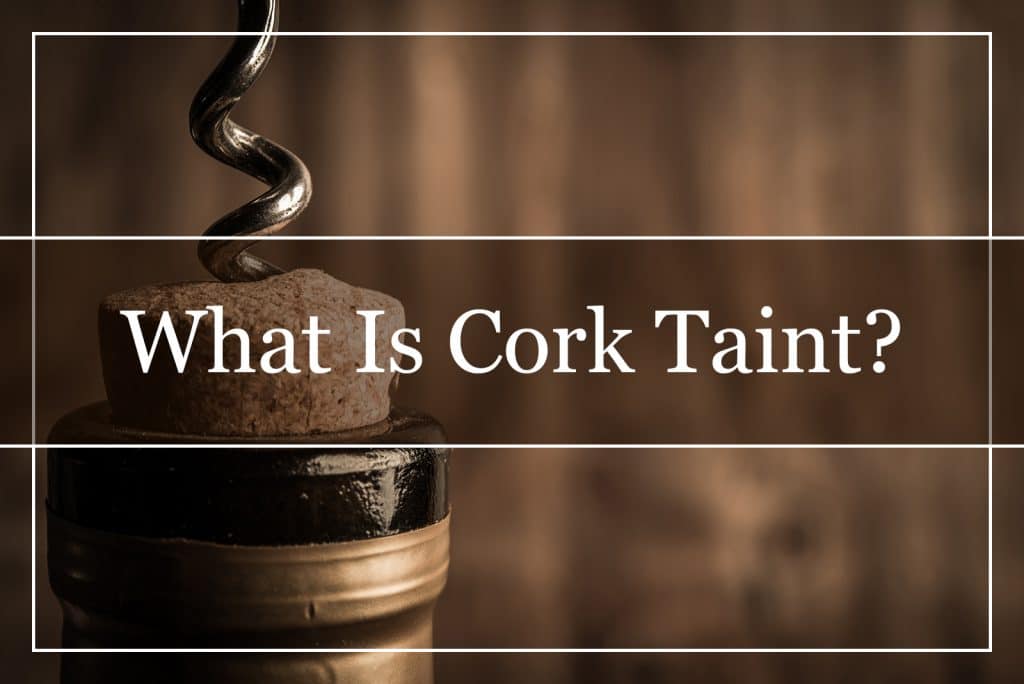
Have you ever poured a glass of wine only to realize that it has a strange moldy smell? Did your wine suddenly become flat and tasteless? If you have faced such situations, then your wine was most likely cork tainted or “corked.”
So, what is cork taint? Cork taint is a term used to describe flaws in wine such as stale aroma that affect the wine’s smell and taste resulting from musty or stale aroma compounds. The primary reason behind this is the 2, 4, 6 trichloroanisole or TCA chemical compounds. Cork taint roughly affects 5 percent of all wines that are naturally corked.
Causes of Cork Taint
Cork taint not only gives off a really pungent smell but also ruins the taste of wine. Let’s learn a little more about what causes this unpleasant wine defect.
Halophenols
Halophenols is a chemical compound that is formed when the fungi, mold, and bacteria present in the tree bark come in contact with a group of fungicides and insecticides. This process leads to the formation of TCA. Although Halophenols are harmless, they lead to the formation of cork taint, which, in turn, affects the aroma and taste of the wine.
Damaged Packaging
Wine producers who make corks out of tree bark may either fail to notice or overlook the fact that the corks had been contaminated with fungicides and insecticides. Moreover, parts such as wine barrels, screw caps, and other equipment may also have been contaminated with TCA. This results in the newly packaged wine being damaged even before it is sold to the consumer.
Presence of Microorganisms
Since cork is usually made from wood or other naturally occurring substances, there is a likelihood of microorganisms eating it away. In some cases, microorganisms such as fungi come into contact with the cork, resulting in TCA, the main culprit behind the taste of the wine being ruined.
In some instances, TCA can also originate in the wineries where the wine is being produced. Here, chlorine-based cleaning products are often used, accompanied by phenols that come from barrels, wooden pallets, wooden beams, and cardboard boxes. Hence, the possibility of a TCA developing on a wine cork cannot be ruled out completely.

How Can You Identify a Cork Taint?
Some studies state that 15 percent of all wines will be contaminated by the TCA taint, while others have stated that only one percent of all wines would be affected. Luckily, TCA is not something that one needs to excessively worry about, since it does not pose a hazard to one’s health.
Nevertheless, if you want to learn how to identify if your wine has a cork taint, there are several ways to go about it.
Smell the Wet End of the Cork
When you open a bottle of wine, take a whiff of the wet end of the cork. Can you detect a faint smell or a strong and musty aroma emerging from the cork? Then, take a few sniffs of the wine and see if it also smells the same way. If either the cork or the wine gives off a strange and musty smell, then the wine has likely been contaminated by TCA.
Lower Level of Cork Taint
When TCA is at lower levels, people may not be able to figure out if their wine has a cork taint. Since humans can only identify the presence of TCA between two and five parts per trillion, at a low level, it is hard to know if a wine has been contaminated or not. Thus, if someone drinks a glass of wine that has a cork taint, it will most likely not stink, but will not have any fruity or floral smells and would be tasteless.
However, scientists have come up with a method to identify traces of TCA in wines, even at lower levels, that can also help to remove the contaminant from the drink. The process involves soaking wine that is suspected to have TCA, in a pitcher. The pitcher should be covered in plastic wrap and left for 15 minutes. Later, the wine should be poured into a new vessel, leaving the plastic wrap behind. Researchers at UC Davis have stated that the cork taint will stick to the plastic wrap by doing this, restoring the wine’s original taste and making it safe to drink.
Corked Wine Taste
When there are higher levels of TCA, the wine will give off musty and moldy aromas that closely resemble that of wet cardboard, a soggy newspaper, a wet dog, or an unclean and moldy basement. Some people have also mentioned that wine affected by cork taint tends to taste very acidic or bitter.
Can Cork Taint Make You Sick?
Since it is advised that one must not eat foods that have become moldy, people believe that wines contaminated with TCA should not be consumed. As the presence of TCA in higher concentrations gives off a moldy smell and mold can make people sick, many assume that drinking a cork-tainted wine might lead to health problems.
However, this is far from the truth. While the thought of consuming something that has fungi and other microorganisms doesn’t sound pleasant, drinking a glass of wine that has cork taint will not make you sick. Instead, the wine will only become tasteless and flat. In addition, you should know that when you are smelling corked wine, you aren’t smelling the TCA compound itself; instead, the TCA is preventing your olfactory receptors from getting the fruity and floral aromas typically associated with wines.
Can Cork Taint Cause Infections?
Industries that are involved in the production of the 2, 4, 6 trichloroanisole state that direct exposure to TCA can cause skin and eye infections and even respiratory problems. Nevertheless, since contaminated wine only consists of minuscule amounts of TCA, one need not worry about falling sick.
In some instances though, people may have an adverse reaction to wine that has a moldy and musty smell. They may develop hives and rashes on the skin and around the eyes, have an upset stomach, or even shortness of breath. If such problems occur, then one should see a doctor at once. It is also recommended that if you happen to smell or taste a wine that has a stinky odor or if the wine is tasteless, too acidic, or bitter, you should either return or discard the wine immediately.

How to Prevent Cork Taint?
Although eliminating the chances of a wine becoming contaminated with cork taint is not possible, the risk can be reduced.
Avoid Using Chlorine-Based Products
Winemakers and producers can start by not using chlorine-based cleaning products as well as phenols that come from barrels and cardboard storage boxes. They can replace them with cleaners that contain per-carbonate. Some of the well-known cleaning brands that contain per-carbonate include OxyClean, PBW, and B-Brite Cleanser.
Avoid Soaking Corks in Sulfur Dioxide
Another way to prevent wines from being affected with cork taint is to avoid soaking the corks in sulfur dioxide chemical solutions, as a higher concentration of this chemical compound can give off a moldy and earthy aroma in the wine. Such wines also tend to become contaminated faster.
Ensure That the Corks Remain Dry
To sanitize the corks before placing them on the bottles, winemakers should place the corks in a container or a large bowl of sulfur dioxide gas. The gas can be formed by mixing one-fourth teaspoon of sulfite and one-fourth teaspoon of citric acid in one liter of water. The corks should then be placed above the vessel on a strainer to ensure that they remain dry. This method will provide a solution with a high concentration of sulfur dioxide and ensure that the corks stay dry.
Check Every Cork for Contamination
Some producers and cork suppliers also test individual corks to test them for the presence of TCA, although this is a time-consuming process. Others may soak a selected bunch of corks in a neutralized alcohol solution and then smell each cork to check if it has traces of TCA. If even a single cork is contaminated, then the entire set of samples is rejected.
Can Consumers Prevent Wine From Getting Corked?
As a consumer, there isn’t much that you can do if you find your wine is corked. Storage conditions are not related to TCA contamination. For example, storing your wine at the right temperature, holding it for too long, or keeping it away from humidity and heat does not result in TCA contamination. Once a wine is contaminated, it will stay cork-tainted. Thus, it is recommended that you avoid consuming wine that has cork taint, or return it to where you purchased it from.
Conclusion
While the possibility of eliminating TCA contamination or cork taint is next to none, winemakers have been taking several steps to reduce the chances of their wines becoming contaminated.
Although the presence of TCA doesn’t make anyone sick, it does ruin your wine irreparably. Being a little more informed about wine will help you detect any irregular smells and tastes, including those of corked wine, allowing you to have a better wine experience.