What Is Grenache?
Grenache (also known as Garnacha in Spain) is a black grape variety widely cultivated in France, Spain, the United States, and Australia.
The grape grows extensively in the Southern Rhône wine region, Languedoc-Roussillon and Provence. For the most part, it is found next to Mourvèdre and Syrah to create the prestigious Southern Rhône blend, Côtes du Rhône, and is also the chief grape used in Châteauneuf-du-Pape.
In Spain, Grenache is among the most planted red-wine grape varieties. It is grown everywhere in Spain, but mostly in the East and North, and it is the main blending component in the renowned Priorat wines. Now, this ubiquitous grape varietal is grown in emerging wine-producing countries, like Mexico, China, and Israel, too.
When produced as a single-varietal wine, Grenache characteristics exhibit distinctive richness and pronounced red berry flavors, such as raspberry and strawberry, hints of baking spices, and tobacco. The Grenache grape is vigorous and hardy as a vine, and due to being able to grow in a variety of growing conditions, acid and tannins vary. That said, wines from old-vine Grenache produce highly concentrated wines ideal for very long bottle-aging.
What Color Is Grenache?
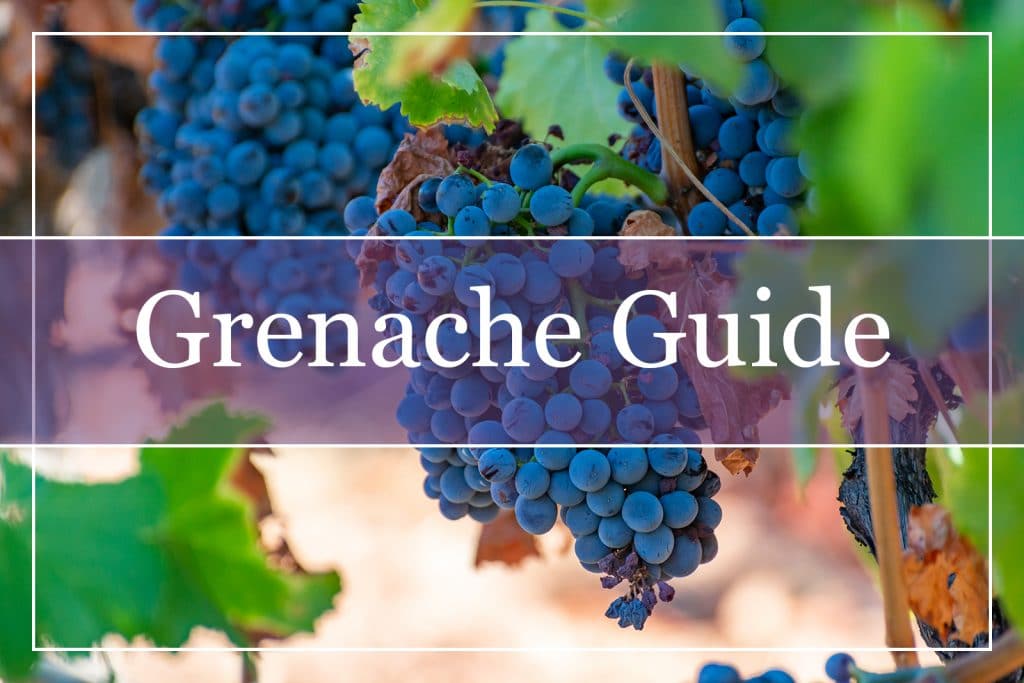
Grenache is thick-skinned, like Pinot Noir, with medium bunches of fruit and a blue-purplish color. It is a grape from the Vitis vinifera species, which is the standard Eurasian grape variety. Most grapes used in winemaking are family members of the Vitis vinifera. Up until ‘véraison’ and berry ripening, Grenache grapes are hard and thick to the touch. ‘Véraison’, however, signals the point at which the grapes begin to ripen.
Between ‘véraison’ and harvest, grapes grow and fill with water. During ripening, grape sugar levels rise, and the acid levels drop. Color pigments and flavor components accumulate. Warm and sunny conditions are ideal, while mild water stress inhibits soot growth, encouraging grape ripening. It is then that the grape’s skin changes color, with Grenache color turning into shiny red and bright blue. Finally, just before harvest, the Grenache grapes manifest into a soft, faded purple.
What Does Grenache Mean?
Grenache is a French word and has its fair share of synonyms. In Spain, it is called Garnacha and is one of the country’s flagship grape varieties. Also, on the Italian island of Sardinia, Grenache has been known as Cannonau for centuries. In addition, a scientific hypothesis suggests that Grenache was a white grape called Vernaccia but was taken to Spain by the Aragonese when they occupied the island in the 14th Century. Later, the grape moved from Spain and settled in Southern France.
How to Pronounce Grenache?
The pronunciation of Grenache could be challenging for non-native French speakers. That said, wine lovers should not get discouraged and make an effort to try to learn how to pronounce the grape correctly. There are many helpful audio and video examples online that aim to help people pronounce wine grape varieties. Grenache has two syllables, and the emphasis falls on the first syllable. Here is what it looks like phonetically:
greh-nash
Where Does Grenache Come From?
Grenache, Grenache Noir, or simply Garnacha is a key grape variety of both France and Spain. In France, it is widely planted in the Southern Rhône wine region, Languedoc-Roussillon and Provence. It is an indispensable blending component of the Rhône Blend and the main grape varietal in the prestigious Châteauneuf-du-Pape.
Grenache is a versatile variety enabling winemakers to produce wines of diverse styles. For instance, Grenache rosé is a signature wine of Southern France. It is common in Côtes de Provence together with Cinsaut and Mourvèdre. The best examples of Grenache rosé come from the Tavel and Lirac. Also, Grenache plays a major role in the sweet wines of Banyuls, located just a few meters away from the border with Spain. In Banyuls Grenache Noir’s cousins, Grenache Blanc and Grenache Gris are planted along with Spanish varieties, such as Carignan and Macabeu.
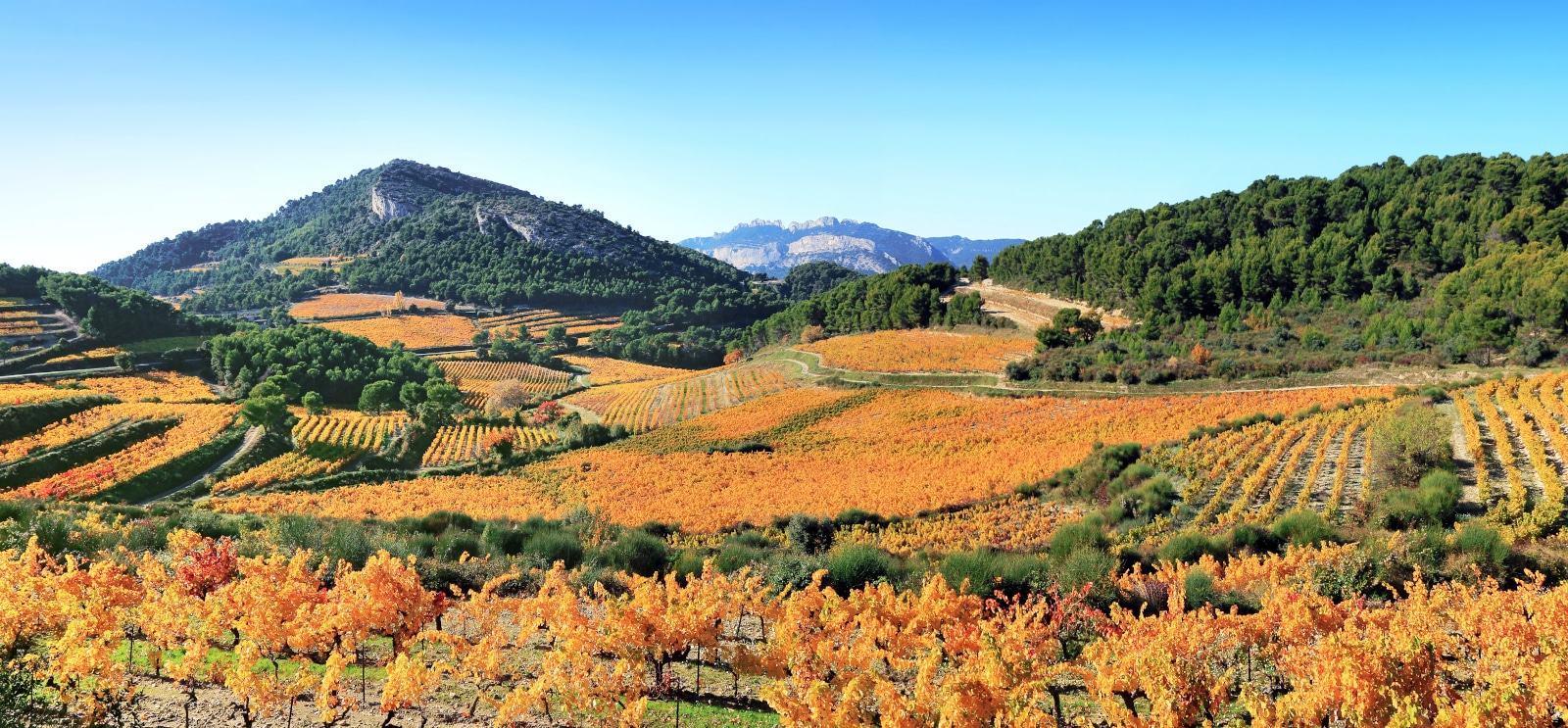
In the Iberian Peninsula, Garnacha is the standard blending partner of Tempranillo. It also grows almost everywhere in Spain and is the main constituent of the Priorat wines. In the 19th Century, the grapevine pest ‘phylloxera’ arrived in Spain from the United States but benefited Garnacha unexpectedly. As the native Spanish vines were devastated, Garnacha was planted in their place. Therefore, Garnacha replenished the destroyed vineyards, encouraging the recovery of the Spanish wine industry.
During the 1990s, Grenache lost popularity to other varieties, however. It needed at least a decade to take off, becoming internationally popular again in the 21st Century. China, Israel, and Mexico, all of them emerging wine-producing countries, began cultivating Garnacha to cash in on the grape’s recent fame.
What Kind of Wine Is Grenache?
Grenache is produced to be a medium-bodied red wine with high alcohol and a rounded mouthfeel full of red fruits. It can be oak-aged, too, and is perfect for almost any occasion. I would recommend sipping it at the casual barbecue or formal gatherings when circumstances demand a dynamic, smoky, but also fruity red wine. Grenache is aromatic, too, and is an incredible wine to treat sophisticated guests.
As always, the terroir is crucial to forming a wine’s personality and flavor components. Grenache is hardy as a vine and withstands drought, so it is ideal for hot climates. As such, wine growers may let Grenache grapes develop way into the season to increase their sugar and flavor concentration as much as possible. Expect to find overripe Grenache wines from regions such as Australia, California, or Spain.
Is Grenache Dry or Sweet?
Pinning Grenache down to a black-and-white profile is very challenging. The reason for this is that Grenache wines can be bone-dry, semi-sweet, or sweet. For the most part, however, Grenache is dry. But if it gets super ripe, it tastes a bit sweet, too. In addition, the wine maker’s experience and skill play a crucial role in the final wine’s flavor profile. Grenache is made as a rosé and might be fortified too if used as a blending partner in dessert wines.
What Does Grenache Taste Like?
Grenache tasting notes highlight the candied fruitiness and the spiciness of the flavors. With medium-body and high alcohol levels, Grenache tastes a bit sweet. The aromas and flavors of Grenache, however, vary depending on where the grapevines have been cultivated. In Old World countries, such as Spain or France, Grenache shows tobacco and dried herbs notes on the palate. But in New World wine regions, Grenache exhibits tastes of cherry, plum, anise, and cinnamon spice.
In general, the Grenache aroma is subtle and sweet-smelling. Aromas of blood orange, strawberry, and grapefruit join honeysuckle and elder flower notes. Hints of leather and charred wood are also present on the nose, creating a very aromatic bouquet for such a weighty wine. In the mouth, the medium acidity refreshes from the ripe cherry and raspberry flavors, while the cinnamon spice and smoke touches offer a characteristic depth. The finish is medium and straightforward, with a lingering citrus rind and butterscotch tastes. The tannins are nearly always velvety. Consequently, the Grenache flavor profile is diverse and one-of-a-kind.
How to Serve Grenache?
Grenache can be served young or after having aged for an extended period. The perfect temperature to serve Grenache is at room temperature between 60-65°F (15-18°C). On the other hand, a very young Grenache is ideal when given a bit of chill, as pepper and tobacco tones tend to come out once the wine cools down. Serve a light Grenache at approximately 53°F (12°C) for the best possible taste. And remember to pour the wine into larger-sized red wine glasses for maximum enjoyment.
Can Grenache Age?
As mentioned above, Grenache has reliable foundations as a grape and can withstand maturation successfully. While aging, Grenache intensifies its flavor concentration, developing aromas and flavors of game meat, leather, smoke, wet leaves, marmalade, and dried fruits.
To mature the wine, seal it with a cork and store it in an environment with room temperatures that do not fluctuate (50-55°F or 10-15°C) and a portion of humidity.
Direct sunlight or artificial light should be kept at bay, as they may cause irreversible damage. Intense exposure to light rearranges the chemical makeup of wine. For example changes to oxygen or temperature can cause wine faults. That means that the wine ages prematurely, and its aromas, flavors, and even color change for the worse. The resulting wine is known as light-struck.
Odors also must be avoided, as they might find their way inside the bottle. If they do, they usually instill unwelcome aromas and flavors, like intense animal sweat or vinegar.
How Long Should Grenache Breathe?
Grenache is not that lightweight but a medium-bodied red wine, so a little aeration benefits it. Choose a beautiful decanter and pour the wine into it. That said, decanting is not necessary. Just pouring the wine into the glass suffices, it lets it breathe and contact the oxygen in the air. Give Grenache about half to an hour to aerate before serving. By doing so, you enhance some of the red fruit elements, helping them integrate better with the secondary and tertiary aromas and flavors.
What Food to Pair With Grenache?
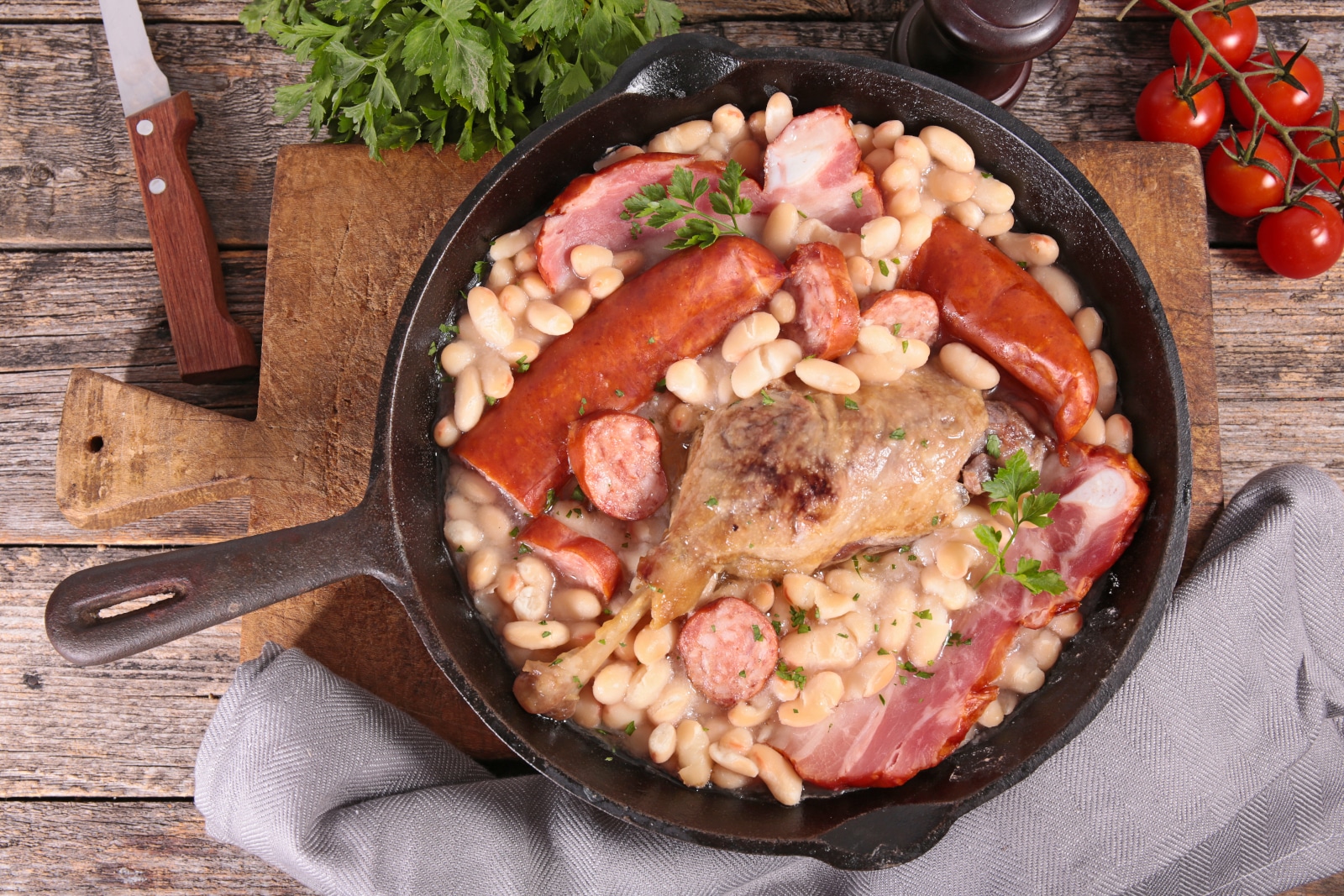
As a red wine packed with spices, Grenache pairs perfectly with spiced dishes, such as roasted meats and ethnic foods, including Indian and Thai. The high alcohol of Grenache matches with the heat of spicy sauces, while a slightly chilled Grenache reduces the burn sensation of spicy foods. Pair Grenache with grilled, braised, or even stewed meats, like venison, beef, veal, pork, and chicken. Grenache also holds its own with strong dishes such as cassoulet. Some sample course choices to accompany Grenache are spicy lamb meatballs in a hearty tomato sauce, roast chicken with carrot purée, or potato stew with lentils, turmeric, and mushrooms.
Moreover, use herbs abundantly when cooking food you intend to complement Grenache with. Cilantro, dill, oregano, or basil, are some of the best choices you can make. Try using red pepper flakes, turmeric, curry, and paprika to enhance the spiciness of the wine’s flavors. As a final note, thanks to its structured tannins, Grenache works nicely with grilled seasonal vegetables or a Moroccan tajine. So, pairing food with Grenache is definitely interesting, bringing endless pleasure to the taste buds.
Grenache Cheese Pairing
Grenache matches particularly well with softer cheese varieties made from sheep’s and goat’s milk. Serve the wine with crumbly Feta, Lanark Blue, Manchego, Caprino, Formaggio, sweet Anthotyros, St. James, and Zamorano. Use the cheese in dishes such as pasta, pizza, or salads, or slice them and serve them on a cheeseboard. Additionally, you could try the wine with Ferme du Chemin Chataigne, Picodon, Chabichou, Manouri, Montrachet, and Caciotta, for a stronger cheese flavor.
How Much Alcohol Does Grenache Have?
Grenache alcohol content is higher than most red wines – in the range of 13 to 16% ABV. That is a high alcohol concentration, but it is not surprising, considering that Grenache gives fortified wines, too. Before purchasing the bottle, though, do check the label to be more precise. As always, remember to drink responsibly.
How Many Calories Are There in Grenache?
Bear in mind that alcohol increases calories in wines! As such, Grenache is a wine not that friendly to consumers on a carbs-free diet. The carbs in Grenache range from 1 to 7 per glass, and the calories from 95 to 129 per serving. Grenache lovers monitoring their caloric intake should strive to obtain a bone-dry Grenache with alcohol levels in the range of 13% ABV.
Conclusion
Grenache is a lovely wine and grows more popular than ever. With flavors of raspberry, aromas of strawberry, and hints of tobacco and smoke, Grenache is complicated, producing mouth-watering and well-rounded wines. It is considered an unsung hero of the wine world and offers from affordable Côtes du Rhône bottles to rare examples, such as masterfully crafted Châteauneuf-du-Pape wines. Grenache is bold beyond comparison and sings with particular expressiveness in both the Old and the New World.