

Botrytis cinerea is a fungus or mold responsible for causing rot in many fruits, including wine grapes. In fact, grapes are highly susceptible to this fungus. Botrytis causes bunch rot, commonly known as grey rot or botrytis rot. While infecting a fruit, it also creates ideal conditions for the growth of spoilage organisms. Apart from botrytis, microorganisms, such as mold, bacteria, and yeast are involved in fruit rots, too.
Botrytis causes noble rot only under ideal climatic conditions. The result of noble rot is the production of high-quality luscious sweet white wines. That said, botrytis can cause both noble and ignoble rot, depending on the way it develops, as well.
What Is Vulgar, Sour Bunch, or Grey Rot?
Winemakers that employ botrytis to their advantage have to be careful. The botrytized grapes need to be picked on time. If not, and the humidity remains high, the fungus will continue to expand, producing undesirable changes in the berries. The grapes will swell and eventually burst. This splitting makes the berries susceptible to attacks by other spoilage microorganisms and fungi, including powdery mildew and acetic acid bacteria. This condition has been known as sour bunch rot, vulgar rot, or grey rot.
Since it is caused by botrytis, sour bunch rot thrives in damp conditions as it attacks grapes. Some symptoms of this rot involve the decomposition of the grape berries and an intense vinegar smell, tainting grape flavors. On top of that, it can lead to color loss in black grapes. That said, in certain conditions, as previously mentioned, and for selected white grape varieties, botrytis infection is beneficial. It helps produce some of the finest sweet wines in the world.
How Sour Bunch Rot Develops
Botrytis occurs at flowering, even though symptoms may not appear until harvest season. Initial symptoms include water-soaked spots on berries. At this point, the grape skin is easily removed, known as slip skin. When infection is over, the grapes change color, and a grey fungal growth emerges. Once it infects a berry, botrytis spreads across neighboring grapes as it sporulates. The grapes shrivel and, if intensely warm conditions are still in place after infection, they become mummified.
What Is Noble Rot?
Noble rot is used in the production of the very best sweet wines, including Riesling Beerenauslesen and Trockenbeerenauslesen from Germany and Austria, Tokaji from Hungary, and Sauternes from Graves, Bordeaux.
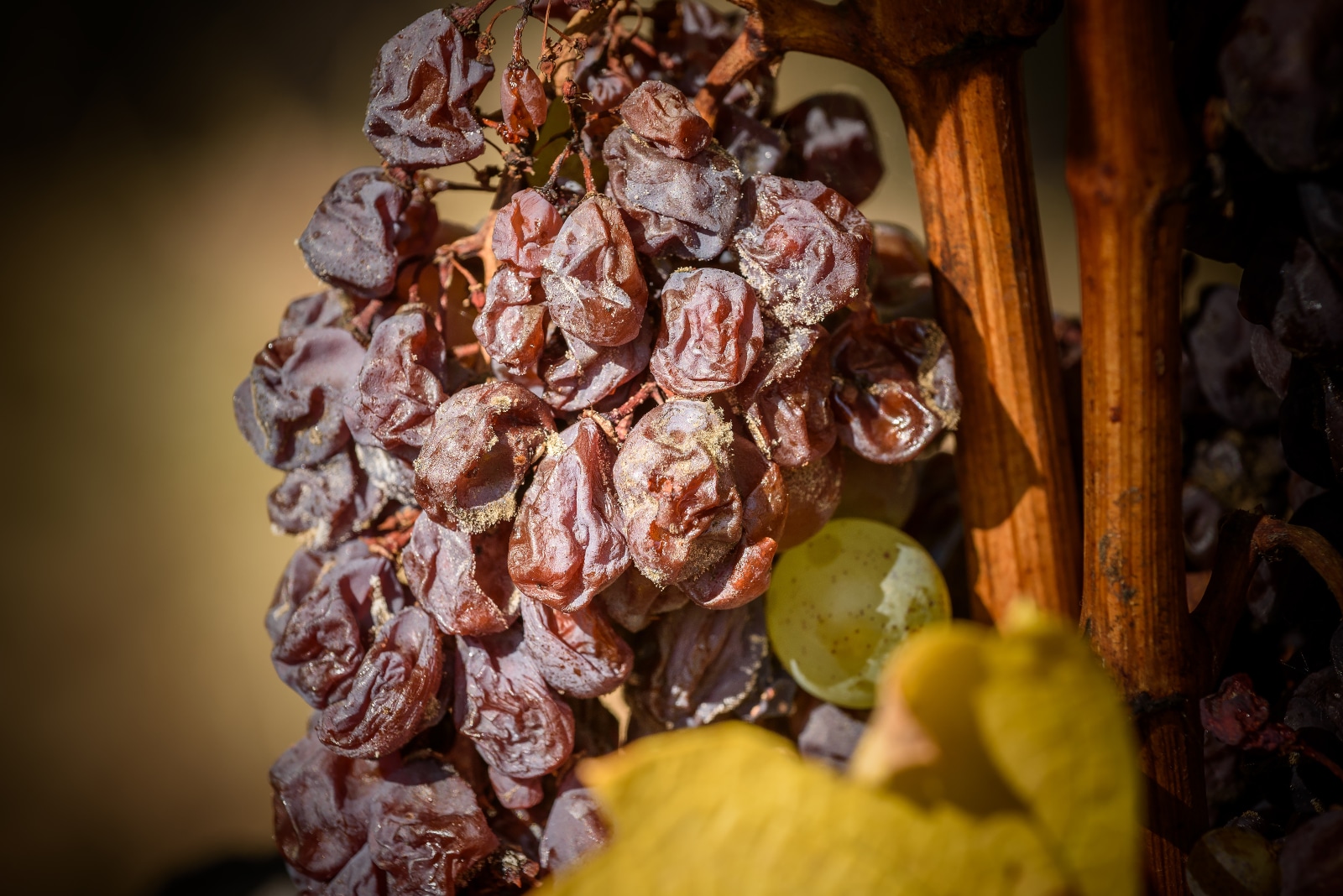
Under specific conditions, therefore, botrytis causes noble rot instead of grey rot. First, the grapes have to be fully ripe before the development of the rot. Second, the grapes must be grown in a region with misty mornings and sunny, dry afternoons. Damp conditions in the morning enable rot to develop on the grape skins. The fungus punctures said skin with tiny filaments, leaving small holes in the skin. The warm sunny afternoons slow the development of the rot, causing water to evaporate from the grape, thus concentrating its sugars, flavors, and acids. In addition, the fungus instills its own flavor components in the grape. Wines made with noble rot show honey, citrus zest, dried fruit, and pronounced apricot elements.
The spread of noble rot is never uniform, and several pickings by hand are needed to select the finest grapes. This an expensive process as it requires skilled labor over a prolonged period of time. On top of that, the ideal conditions for noble rot do not occur constantly. For example, in Sauternes, botrytis occurs only in some years, not during every grape growing season. If conditions are too damp, the fungus will develop too rapidly and cause grey rot, splitting the grape berries and encouraging infections. Although botrytis cinerea is the cause of both noble and grey rot, the botrytis term is frequently used as a synonym for noble rot. Therefore, seeing the term botrytized on sweet wine labels is not uncommon.
How Noble Rot Develops
Humidity and temperature are, by far, the most significant factors that determine the appearance and development of noble rot. A humidity of 85-95% and a warm temperature of 20-25°C (68-77°F) for at least 24 hours are required, during the botrytis infection phase. After the infection has occurred, the humidity drops below 60%. In fact, this drop in humidity is a critical factor in the dehydration (water evaporation) of the infected grape berries.
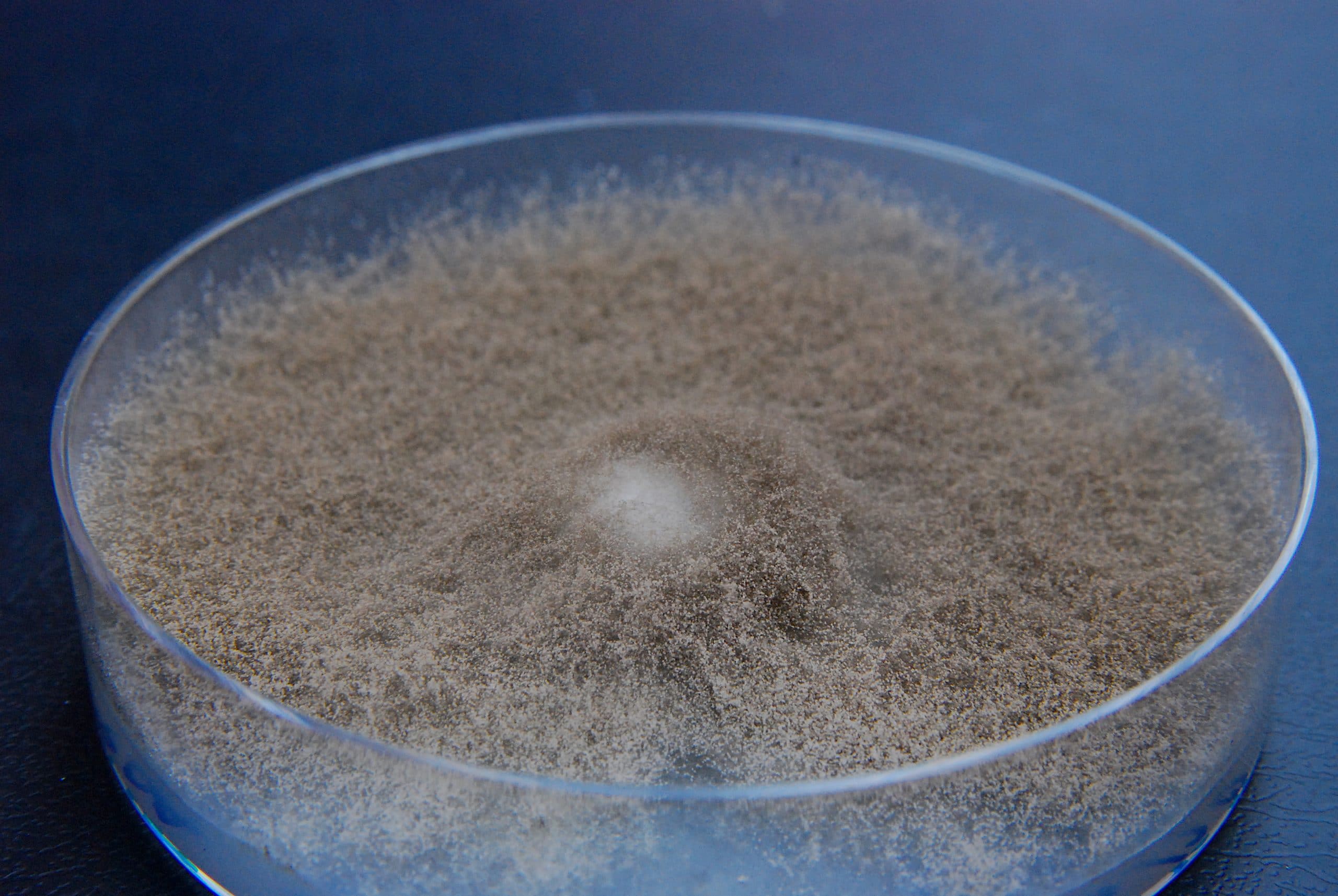
As noble rot develops, the mold mycelium penetrates the skin of the grapes. Then, the skin does not split, but it does become permeable. At this point, the berries dry, losing water but increasing their concentration of sugars and relevant constituents, such as acids. Inside the berries, the osmotic pressure increases while the activity of botrytis decreases. This limited, constrained activity causes changes in the berries, enabling winemakers to produce some of the most prestigious sweet white wines.
Changes Influenced by Botrytis
Botrytized grapes show changes in their composition, as expected. These changes depend on the degree, nature, and development of the rot. Below are given the most important changes in berry composition caused by the presence of noble rot.
Organic acids, such as malic and tartaric, are metabolized and reduced in amount. This reduction in acidity increases grape must pH.
Aroma components are destroyed, including terpenes, responsible for rose petal aromas in wines, and other compounds that promote the characteristic botrytis aromas appear in their place instead.
Nitrogen is reduced, as well.
The polyphenol oxidase enzyme, which is present in healthy, non-botrytized grapes, is destroyed. In its place, another oxidizing enzyme is produced. This enzyme is known as a laccase. It oxidizes a broad range of phenolic compounds and is resistant to sulfur dioxide. To red wine, laccase is detrimental as it degrades procyanidins and anthocyanins, which are crucial to red wine phenolics.
Some complex polysaccharides are produced, too. Among them, molecular weight glucans are produced. These cause filtration issues. Additionally, heteropolysaccharides appear, as well, and exert an inhibitory influence on alcoholic fermentation.
During the rot development, botrytis consumes almost 50% of the grape sugar. The increase in sugar concentration occurs due to the dehydration and water evaporation of the grapes, however.
Ultimately, bear in mind that special vinification methods are needed to handle grapes affected by noble rot.
How Winemakers Prevent Fungal Diseases
Fungal diseases are controlled using fungicides, which are chemical sprays. Traditionally, winemakers treated these diseases with a sulfur-based spray and copper-based spray. Even though said sprays are still in use, new treatments have sprouted. Spraying is done by tractor, however, rarely by hand.
More sprayings are required in maritime climates, where there is high rainfall during the growing season. However, spraying must stop close to harvest time to help wine remain clear of harmful chemical residues.
The risk of fungal disease development can also be reduced using canopy management. For instance, a shady vine canopy restricts airflow and prevents water from evaporating, creating a humid environment. Meanwhile, an open vine canopy enables better airflow. Water evaporation is promoted, while the vineyard is also kept as dry as possible. This has the environmental advantages of reducing chemical spray usage, which, when used, can reach into every part of the canopy.