What Is Grüner Veltliner?
Grüner Veltliner is the signature and, by far, the most widely planted grape variety in Austria. This high-quality grape that shows spicy expressions has made Austria a point of difference in export markets. The best Grüner Veltliner wines are produced from fruit cultivated next to the Danube River and specifically in the Kamptal, Kremstal, and prestigious Wachau regions.
Outside Austria, Grüner Veltliner is widely cultivated in the Czech Republic, Slovakia, Hungary, and Slovenia. Plantings are found in Italy, New Zealand, the United States, and Australia, too, but in smaller numbers. Grüner Veltliner cannot grow in neighboring Germany due to the country’s cool and wet climate that doesn’t benefit this late-ripening variety.
The characteristics of Grüner Veltliner highlight the freshness of the flavors. In general, the grape produces fresh, albeit a bit unexciting wines if yields become too high. However, if grown carefully, Grüner Veltliner wines are expressive with concentrated flavors, medium-to-full body, and high acidity. Expect flavors of citrus and stone fruit on the palate or notes of white pepper, honey, and smoke if the wine ages in oak barrels.
What Color Is Grüner Veltliner?
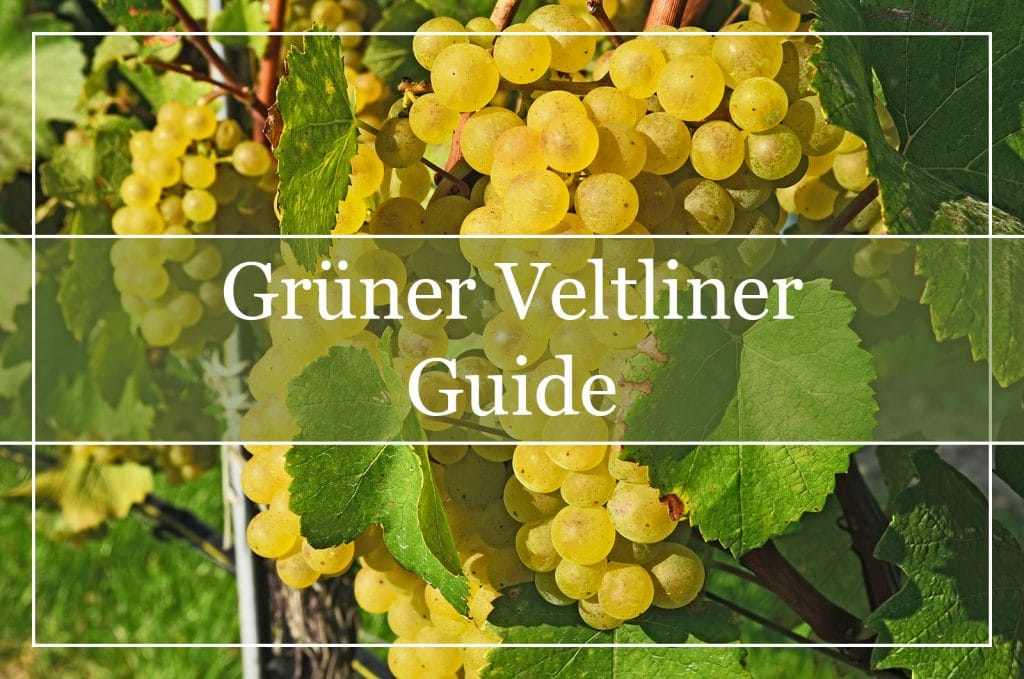
Grüner Veltliner is a white wine grape variety with a pronounced yellow-greenish hue. It is a grape from the Vitis vinifera species, which is the standard Eurasian grape variety. In fact, most grapes used in winemaking are family members of the Vitis vinifera. Up until ‘véraison’ and berry ripening, Grüner Veltliner grapes are hard and thick to the touch. ‘Véraison’, however, signals the point at which the grapes begin to ripen.
Between ‘véraison’ and harvest, grapes grow and fill with water. During ripening, grape sugar levels rise, and the acid levels drop. Color pigments and flavor components accumulate. Warm and sunny conditions are ideal, while mild water stress inhibits soot growth, encouraging grape ripening. It is then that the grape’s skin changes color, with Grüner Veltliner color turning first into a translucent green and then into gold with tiny red pigments.
What Does Grüner Veltliner Mean?
It may sound a bit quirky, but Austrian winemakers have dubbed the variety Gru-Ve (Groovy), the initials of the varietal’s name. That’s a clever marketing move, considering that Austria focuses on exporting the grape abroad, in the international wine market, rather than pursuing its local market. Grüner translates into green, reflecting the varietal’s green-yellowish berries, and perhaps, the green pepper notes that define Grüner Veltliner flavor profile. As to Veltliner, it is a common suffix among European grape varietals. A theory suggests that Veltliner might be a reference to the Italian city Valtellina, located in Lombardy in Northern Italy.
How to Pronounce Grüner Veltliner?
The pronunciation of Grüner Veltliner is very challenging to the uninitiated, so learning how to pronounce the grape correctly brings respect among wine-tasting circles. Fortunately, there are many helpful audio and video examples of how to pronounce Grüner Veltliner online. A simple Web search suffice. There are five syllables in the word, and the emphasis falls on the first and the fourth syllable. Here is what it looks like phonetically:
grew-ner velt-lee-ner
Where Does Grüner Veltliner Come From?
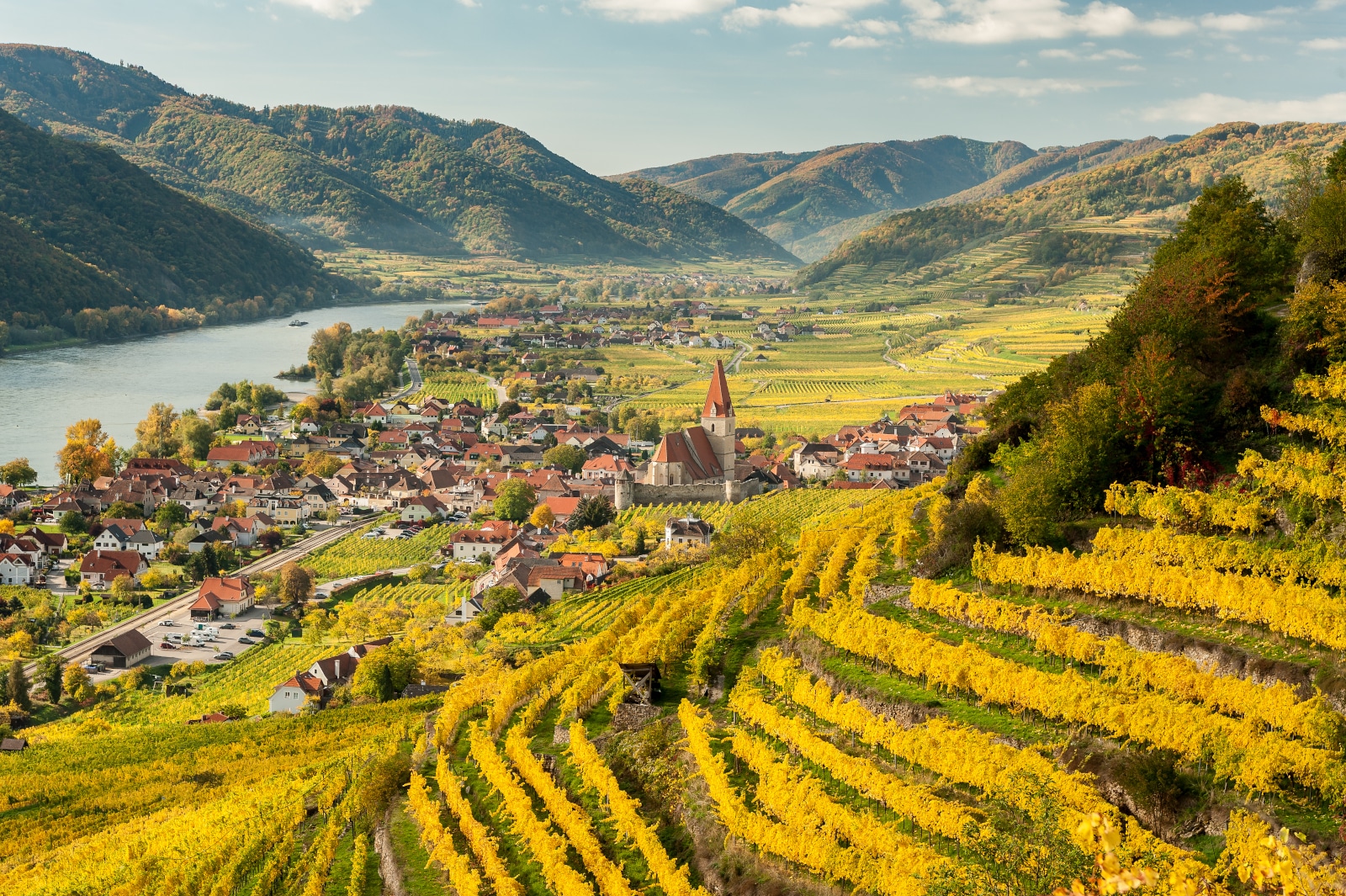
Grüner Veltliner is the star grape variety of Austria and is widely cultivated in the country. The most significant plantings are in Wachau, Kamptal, and Kremstal, where the vineyards lie just above the Danube River.
Wachau is noted for exceptional Grüner Veltliner wines. It is a steep and terraced region, where south-facing Grüner Veltliner vineyards rest next to the Danube. Their exposure to the sun is maximized, allowing the grapes to develop concentrated flavors. In addition, Grüner Veltliner is also grown in Weinviertel, Austria’s largest wine-growing area. In fact, there, Grüner Veltliner is the only permitted grape variety. In Weinviertel, Grüner Veltliner is ranked as ‘Klassik’ or ‘Reserva’. ‘Klassik’ wines have to be fresh and fruity with no oak flavors. ‘Reserva’ wines must have higher minimum alcohol and are allowed to mature in oak.
Grüner Veltliner’s seems to have originated from Traminer and a scarce variety named St. Georgen. To realize how rare this variety is, you should know that only one St. Georgen vine exists today, and it is located close to Eisenstadt in Austria. Traminer also has a connection to the Pinot family of grapes. So, in a way, Grüner Veltliner is a distant relative to Pinot, too.
Grüner Veltliner is not planted only in Austria. Significant plantings can be found in the Czech Republic, Slovakia, Hungary, and Slovenia. Australia, New Zealand, and the United States, grow Grüner Veltliner, too, but in much smaller quantities. Neighboring Germany, however, cannot cultivate the grape. There is speculation that the super cold and wet climate does not allow Grüner Veltliner to ripen. So, the production of German Grüner Veltliner wines seems to be an impossibility.
What Kind of Wine Is Grüner Veltliner?
Grüner Veltliner comes in two styles and can be either young and refreshing with stone fruit and vegetable touches or spicy, complex, and well-structured with oaky notes. As such, Grüner Veltliner is versatile and can be sipped on any occasion. For instance, Klassik Grüner Veltliner wines are fantastic poolside with a bowl of seasonal fruits. Reserva Grüner Veltliner examples, on the other hand, could easily accompany a barbecue or a more formal event, such as an engagement party.
In youth, the wine often gives flavors of citrus or stone fruit, sometimes with hints of white pepper, developing a layer of honey and toasted bread as the wine ages. The majority of producers ferment and store their wines in stainless steel. However, old oak casks are also commonly used, and some producers may mature a proportion of their best wines in new oak barrels.
Is Grüner Veltliner Dry or Sweet?
Since Grüner Veltliner comes in many styles, it is challenging to pin it down to a black-and-white profile. Besides, the flavors of a wine depend on the wine maker’s skills and the inclination of the vineyards.
As seen above, Grüner Veltliner vineyards are planted near the Danube or further away from it in mainland Austria. The vineyards that lie next to the river produce high-quality fruit with concentrated sugars and flavors that give some of the most fulfilling Grüner Veltliner wines. However, Grüner Veltliner grapes harvested from mainland Austria give, at best, average-quality wines.
Similarly, the taste of Grüner Veltliner depends on whether the winemaker fermented the wine in stainless steel tanks or used a proportion of it in old oak casks or new oak Bordeaux barrels.
What Does Grüner Veltliner Taste Like?
Grüner Veltliner tasting notes are characterized by citrus, baking spice, and oak flavors. The aroma of Grüner Veltliner is crispy, filled with touches of lemon, lime, and grapefruit. Hints of ginger and pepper are discernible, too, as a note of cinnamon spice may develop in Grüner Veltliner Reservas. In the mouth, Grüner Veltliner is defined by stone fruit flavors, such as peach and apricot, and a faint creaminess on the palate. Sweet textured layers of nuts, honey, and mango, however, are present in the richer Grüner Veltliner styles.
The acidity is almost always uplifting, even in Grüner Veltliner wine examples that have aged for a period of six years or more. In fact, this characteristic sparkle offsets the ripeness, as it brings balance between lusciousness and vividness. The finish is lengthy and waxy, with vegetable notes, including tarragon, green bean, radish, and green bell pepper. Consequently, Grüner Veltliner is delicious and palatable. A sip of Grüner Veltliner is like taking in an Alpine landscape, majestic and endlessly beautiful.
How to Serve Grüner Veltliner?
Like most white wines, Grüner Veltliner is served best in regular medium-sized white wine glasses. The air comes into contact with the wine surface just fine, encouraging it to release its intense aromatics and flavors. As such, you do not need to purchase fancy new glasses. On top of that, Grüner Veltliner should always be served very chilled. The best temperature to serve Grüner Veltliner is 46ºF (7ºC). By doing so, the tangy flavors become refreshing, which is ideal for days when the sun is high.
But to truly enjoy Grüner Veltliner, you have to keep it chilled constantly. To ensure the wine stays cool while serving it, use an ice bucket or wine cooler—not ‘the cocktail’, a standard, boring cooler. The bucket should be filled three-quarters full with equal quantities of ice and water so that iced water surrounds the bottle. Then, the water can transfer the heat from the bottle to melt the ice. Air acts as an insulator, and the bottle chills.
How Long should Grüner Veltliner Breathe?
Grüner Veltliner is not a lightweight white wine, as it can age in oak and be classified as a Reserva. However, aerating it extensively will not benefit it. It is a wine style not meant to aerate much. Decanting a Grüner Veltliner is not wrong, but it is not the best thing to do either. Instead, try and swirl the wine a few times in the glass. By doing so, you will help it to revitalize some of the secondary flavors and aromas.
What Food to Pair With Grüner Veltliner?
Considering that it comes in both a light and heavy style, Grüner Veltliner food pairing can be fun. The wine is crisp, making a perfect palate cleanser when feasting on richly flavored foods. Classic Austrian dishes such as sautéed kidneys or Wiener schnitzel accompany Grüner Veltliner incredibly. The acidity and spice notes of the wine combine with the creamy-rich meat to create a perfect pairing.
Furthermore, Grüner Veltliner matches wonderfully with Asian cuisine and spices. Tonkatsu, a fried pork cutlet served sliced into strips, is delicious with the wine. Grilled artichoke and asparagus are also fantastic food choices to complement a Grüner Veltliner. Some sample herbs I would recommend to use in your foods to bring them closer to Grüner Veltliner’s character: green cardamom, sansho, chives, shallots, white pepper, dill, capers, curry, turmeric, and shiso.

Grüner Veltliner Cheese Pairing
Grüner Veltliner works well with a variety of different cheeses made from cow’s or sheep’s milk. Try it with Havarti, Mahon, Raclette, Gouda, or Garrotxa. The cheese could be served on a cheese board or as part of hearty dishes such as pasta, pizza, or crumbled in salads. Sheep-milk Feta, Chevre, herbed Boursin, or Taleggio are other great cheese choices to serve along with a glass of Grüner Veltliner wine.
How Much Alcohol Does Grüner Veltliner Have?
Grüner Veltliner alcohol content is in the range of 12 to 13.5% ABV. That is a typical alcohol concentration of medium-to-full-bodied white dry wines. As a piece of advice, check the label on the bottle to be more precise about the alcohol levels, and remember to enjoy the wine responsibly.
How Many Calories Are There in Grüner Veltliner?
Young, un-oaked Grüner Veltliners have a low caloric density and are considered diet-friendly wines. As such, the carbs in Grüner Veltliner are 1 to 4 per glass, while the calories range from 94 to 110 per serving.
Oaked Grüner Veltliner wines will show high calories. The carbs would be in the range of 1 to 6 per serving and the calories 119 to 127 or more.
Conclusion
Grüner Veltliner is a distinctive and classy white wine. As the signature variety of Austria, it is indicative of the Austrian wine industry. With flavors that range from citrus to stone fruit to charred wood and a honey-layer texture, Grüner Veltliner is a bright example of how wine grapes turn into fruit-forward or deeply complex wines. Wine enthusiasts can depend on the wine’s ability to deliver aroma, flavor, and, at times, overwhelming fruitiness. The cinnamon spice notes also are representative of its spicy personality and guarantee a one-of-a-kind wine-drinking experience.