What Is Chenin Blanc?
Chenin Blanc is an ancient white-wine grape varietal native to France, where it has been cultivated for approximately 1300 years. Most commonly associated with Loire Valley, Chenin Blanc is a unique variety. Its naturally high acidity can be vinified into several wine styles, from bone-dry to full-bodied or even lusciously sweet as a botrytis-affected dessert wine.
Throughout its long history, Chenin Blanc has had its own share of challenges to overcome. The grape appeared as early as the Middle Ages, and since then, it has appeared in many parts of the Loire Valley under a number of different synonyms. However, it lost popularity at the beginning of the 20th Century, but it came back into fashion in the 1980s. Since then, Chenin Blanc is considered a prestigious and noble grape variety by various growers.
The Chenin Blanc characteristics are diverse, as mentioned above. Typically, dry Chenin Blancs have minerality, and flavors of pear, and hints of ginger. Off-dry examples harbor richer flavors, such as honey and ripe passionfruit. Likewise, the sweetest Chenin Blanc styles incorporate orange blossom and tropical flavors and a pronounced syrupiness. Chenin Blanc is perfect for any occasion, but tasting it on the beach or at a rooftop pool is highly recommended.
What Color Is Chenin Blanc?
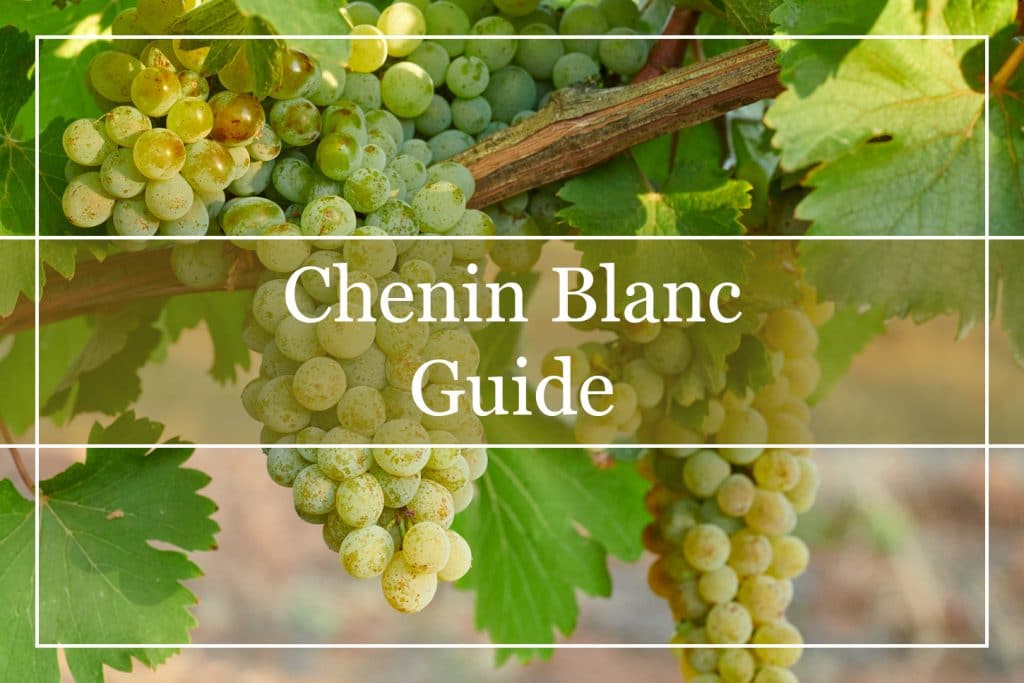
The Chenin Blanc vine produces small bunches of thick-skinned fruit with a greenish-yellow hue. It is a grape from the Vitis vinifera variety of the Eurasian grape species. In fact, most grapes used in wine production are family members of the Vitis vinifera. Until véraison and berry ripening, Chenin Blanc grapes are hard and thick to the touch. Véraison period, however, signals the point at which the grapes begin to ripen. At this point, the grape’s skin changes color, turning crystalline and golden.
Between véraison and harvest, grapes swell and fill with water. During ripening, sugar levels rise, and acid levels drop. Color pigments and flavor components accumulate. Warm and sunny conditions are ideal, while mild water stress inhibits soot growth, encouraging grape ripening. It is then that the Chenin Blanc color exhibits a phenomenal assortment of hues ranging from green-yellow to vivid, shiny gold.
However, if the Chenin Blanc grapes stay on the vines to be botrytized, they develop a soft, muted red color. That is an incredible spectacle and worth visiting the Loire to see it.
What Does Chenin Blanc Mean?
The first known use of Chenin Blanc was in 1913 and meant white wines ranging from dry to sweet made from the Chenin Blanc grape.
Literally, however, Chenin Blanc translates to white Chenin, where white is the translation of the French word blanc, and Chenin is the grape variety.
How to Pronounce Chenin Blanc?
The Chenin Blanc pronunciation is a matter of whether you understand French. It is not hard to pronounce the grape, but it would require a bit of French fluency to break into wine-tasting circles successfully. On that note, there are helpful audio and video examples on how to pronounce Chenin Blanc online. Basically, there are three syllables in the word, and the emphasis falls on the first and second syllables. Here is what it looks likes phonetically:
cheh-nahn blaank
Where Does Chenin Blanc Come From?
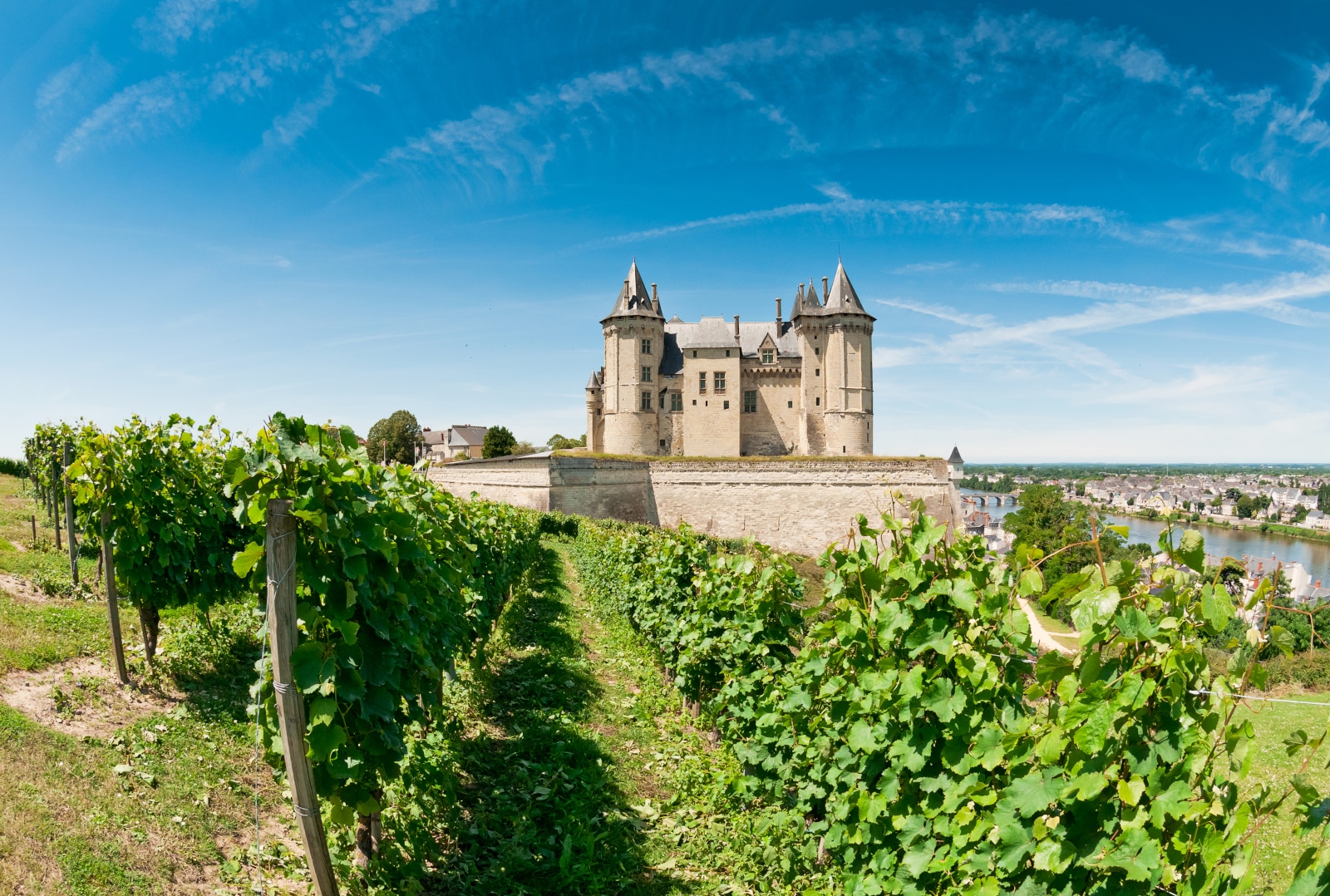
Chenin Blanc is native to the Loire Valley in France, with most of the grape’s plantings being around the cities of Angers and Touraine. Chenin Blanc wines with green fruit elements are found commonly in Savennieres region of Touraine. Similarly, dry and off-dry Chenin Blanc examples are located in the Vouvray region of Angers. There, Chenin Blanc shows a tropical and honeyed character. On top of that, the renowned sparkling wines of Cremant de Loire are made in Saumur, Anjou, and Touraine and are based on Chenin Blanc. These sparkling drinks have a persistent effervesce and a pronounced floral nose, as well as nuttiness due to lees contact, as required by the appellation rules.
As to the best Chenin Blanc expressions from the Loire, these are the botrytized and lusciously sweet wines from Bonnezeaux and Quarts de Chaume. The autumn mists of the cool valleys of the Loire produce the ideal conditions for the development of botrytis, resulting in noble rot and flavors of ripe stone fruit and quince. That said, botrytized Chenin Blanc wines are not as weighty as the sweet wines in Sauternes but can age for just as long as the noted Bordeaux ones. For example, high-quality sweet Vouvray can bottle-age for extremely long, even more than a century.
Chenin Blanc has found favorable growing conditions outside of France, too. In South Africa, Chenin Blanc is the most planted grape, which is definitely surprising, considering that the country’s star variety is Pinotage. In fact, Chenin Blanc plantings are even larger than in France. The grape arrived in Cape Town in the 17th Century and became immediately popular for its high acidity and high yields, even in dry and hot conditions.
Back then, Chenin Blanc was used to create a base spirit for brandy. Later, however, it was used for bulk-wine production and was blended with other white grape varieties to create aromatic and refreshing blends. Today, old Chenin Blanc bush-vines in Swartland and Stellenbosch make concentrated wines that take advantage of the country’s hot climate to give wines with more tropical notes than those in Loire Valley. Flavors of melon, pineapple, banana, passionfruit, and guava are common among South African Chenin Blanc wines.
The United States and California produce large amounts of Chenin Blanc, but most of the fruit is used in average-quality white blends. In addition, Argentina grows numerous Chenin Blanc vines too. But there, the grape is blended with Torrontes, the country’s signature white variety, and Chardonnay, creating easy-going wines. Chenin Blanc is also cultivated in Chile, Australia, New Zealand, and Canada. However, the Chenin Blanc plantings in those countries are small and insignificant.
What Kind of Wine Is Chenin Blanc?
Chenin Blanc is produced to be either lightweight or a more structured, occasionally barrel-aged white wine that is adaptable to any situation and occasion. It can be sipped poolside or on formal dinners, and it can even make a fantastic house gift. Serve it chilled to receive the warmest possible welcome from guests.
Is Chenin Blanc Dry or Sweet?
If a wine is difficult to pin down to a black-and-white profile, then that is Chenin Blanc. The Chenin Blanc grape can produce any wine style in existence. The wine can be bone-dry, off-dry, sweet, or even sparkling. Winemakers, therefore, have found a paradise when it comes to Chenin Blanc, as they can vinify and shape it to their heart’s content. As such, so much about the flavors depending on the winemaker’s experience and will.
The Chenin Blanc flavors are influenced by the position of the vineyards and the climatic conditions, too. That is why winemakers can craft so many different Chenin Blanc styles; in the Loire Valley, where the grape originates, the cool climate enables the fruit to concentrate high acids that can be manipulated later in the winery, producing diverse Chenin Blanc wines.
What Does Chenin Blanc Taste Like?
The Chenin Blanc tasting notes always highlight the versatility of the grape. For starters, the high acidity of Chenin Blanc means that winemakers can produce wines in a vast range of styles.
Chenin Blanc can range from light-to-full-bodied and from bone-dry to off-dry to lusciously sweet. On top of that, in the Loire Valley, where the climate is very cool, the grapes have inconsistent ripening levels. Those that have not reached optimum ripeness are used to create sparkling wine.
In addition, fruit with the highest sugar concentration is used to produce off-dry whites with rich flavors. Over-ripe grapes, often affected by botrytis (i.e., noble-rot), are used to make the lusciously sweet Chenin Blancs of the region.
Therefore, Chenin Blanc wines have diverse flavors and aromas. That said, there are still similarities between them. The Chenin Blanc aroma shows delicate honeysuckle and jasmine fragrances on the nose, as well as apple, quince, and mandarin orange notes. The Chenin Blanc taste varies a lot and depends on the weightiness of the Chenin Blanc wine. Generally, on the palate, passionfruit, honeycomb, mango, and peach flavors are the main driving components. Touches of toasted almond, ginger, and plum are present, too, and add depth. Dried berries and prunes are a characteristic of botrytized Chenin Blancs, while mineral elements define in bone-dry examples.
Furthermore, the acidity is nearly always high and crispy, even in bottle-aged Chenin Blancs, and offsets the intense jamminess. The aftertaste is lengthy and buttery and leaves a fruity and syrupy sensation on the back-palate as the wine flows down the throat. It is fair to say that the Chenin Blanc flavor profile is complicated and structured. But above everything else, it is delicious and palatable.
How to Serve Chenin Blanc?
Like most white wines, Chenin Blanc is served best in regular medium-sized white wine glasses. The air comes into contact with the wine surface just fine, encouraging the wine to release its intense aromatics and flavors. In addition, Chenin Blanc should always be served chilled. The best temperature to serve Chenin Blanc is 46-50ºF (7-11ºC). By doing so, the honey and creamy flavors become refreshing and crispy.
But to truly enjoy Chenin Blanc, you have to keep it chilled constantly. To ensure the wine stays cool while serving it, use an ice bucket or wine cooler. The bucket should be filled three-quarters full with equal quantities of ice and water so that iced water surrounds the bottle. Then, the water can transfer the heat from the bottle to melt the ice. Air acts as an insulator, and the bottle chills. However, be careful, as over-chilling the wine might lead to a decrease in the crispiness of the flavors.
How Long Should Chenin Blanc Breathe?
Chenin Blanc ranges from lightweight to remarkably full-bodied, so it might benefit from receiving a bit of aeration. You can decant it if you like, too, but it is not absolutely necessary. On top of that, little air will revitalize some of the secondary and tertiary flavors and aromas, so try and give Chenin Blanc about 15 minutes to breathe before serving.
What Food to Pair With Chenin Blanc?
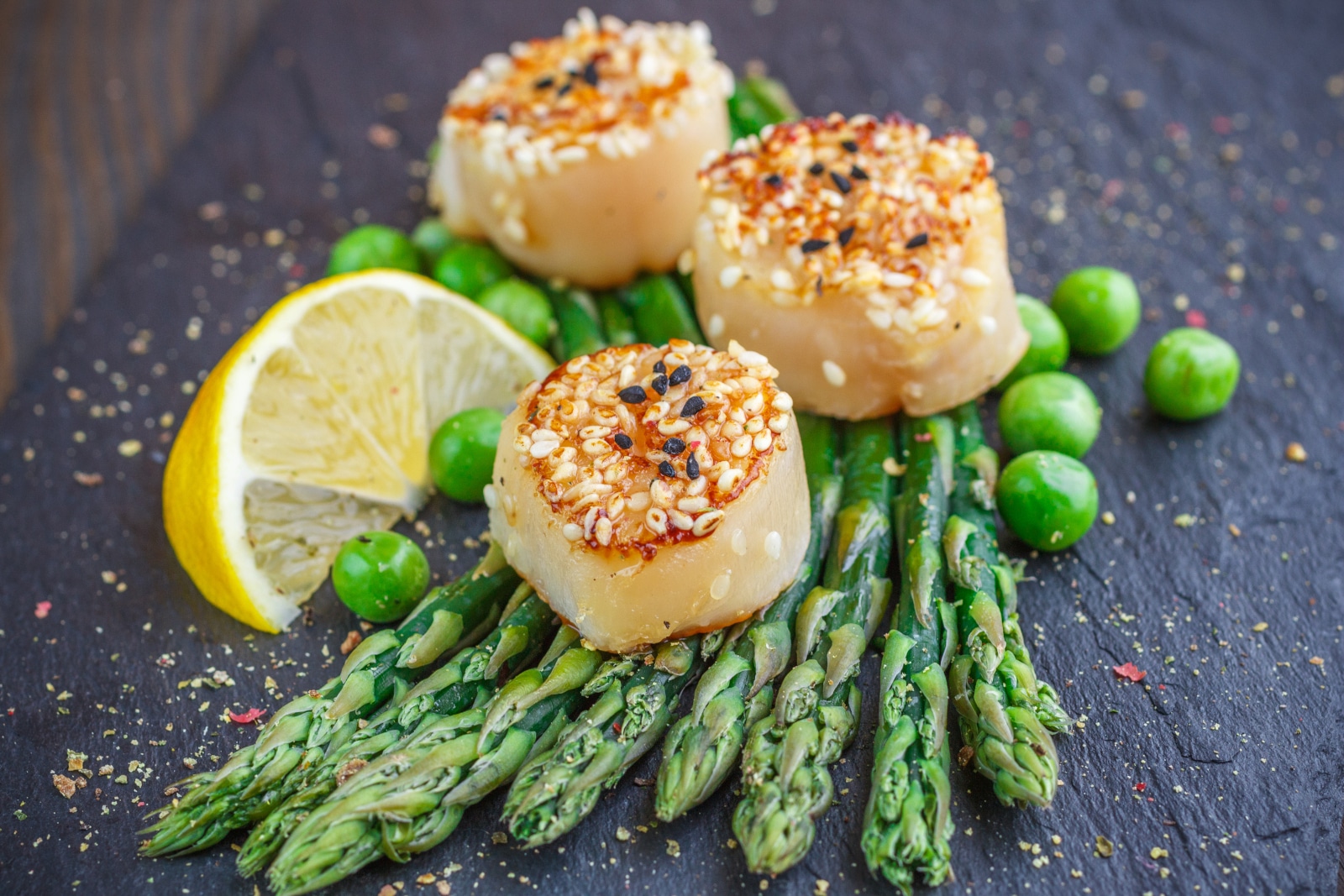
The Chenin Blanc food pairing can be a fun process. In fact, Chenin Blanc is the perfect wine for seafood. Complement the vibrancy and crispiness of the wine with shellfish, such as crab, scallops, or mussels. On top of that, consider pairing Chenin Blanc with dishes, like honey-glazed pork with orange and apple sauce or even white fish (think of carp, sea bass, or red snapper) with a creamy white sauce.
Chenin Blanc is full-bodied enough to be served with several types of meat, too, including veal, venison, turkey, and chicken. Also, consider using herbs abundantly with foods that you will pair with Chenin Blanc, such as cinnamon spice, tarragon, turmeric, ginger, marjoram, allspice, cilantro, cumin, coriander, peanut, sesame seed (and oil), and fennel. Further, vegetables like carrot, cauliflower, corn, red bell pepper, shallot, guava, chives, and apple, make excellent ingredients to use in the accompanying sauce of the main course or even cook them independently.
If you have a lusciously sweet Chenin Blanc wine, though, try to take advantage of the sweetness to counterbalance it with the heat and spiciness of Asian courses. Or combine it with syrupy Middle Eastern sweets, like Greek orange cake, Copenhagen, Baklava, fried dough pastries, or a Caribbean rum cake.
Chenin Blanc Cheese Pairing
Chenin Blanc is super tasty with semi-firm or soft cheeses made from cow’s milk. Pair the wine with Gruyere, aged Cheddar, and triple-cream Brie for unparalleled savoriness. The best way to serve cheese is to place it on a wooden cheese board. That said, the cheese could also form part of courses such as a hearty pasta carbonara or a Hawaiian pizza, which is particularly tasty with a sweet Chenin Blanc packed with exotic notes. The wine works very well with herb-crusted goat cheeses, too.
How Much Alcohol Does Chenin Blanc Have?
The Chenin Blanc alcohol content ranges from 11 to 13% ABV, depending on the style. Overall, though, the grape does not show high alcohol levels. That is typical for white wines. Before uncorking the bottle, however, check the label to be more precise and remember to appreciate Chenin Blanc’s complex personality responsible, avoiding excessive and unnecessary consumption.
How Many Calories Are There in Chenin Blanc?
Calories in Chenin Blanc wines are usually low, even though the wines are often medium-to-full-bodied. The carbs in Chenin Blanc range from 1 to 4 per serving, while the calories are around 120 per glass. Consequently, wine enthusiasts on the lookout for a delicious but calorie-friendly wine choice are on safe grounds with Chenin Blanc.
Conclusion
As a noble and uncommonly versatile grape variety used to produce white wine of varying styles, Chenin Blanc must be tried at least once. Be it crisp, barrel-fermented, lusciously sweet, or even sparkling, Chenin Blanc is anything but boring and can accompany wine enthusiasts across all of life’s moments or any occasion. Chenin Blanc often shows a characteristic sweetness and an acidic nature, which benefits the preservation of the wine, vastly increasing its longevity. As such, you do not have to feel pressure to consume a Chenin Blanc immediately. Instead, store it away, so when the time comes when you need to enjoy a bold white wine with concentrated fruit flavors, Chenin Blanc will be ready to serve.