
A good corkscrew is a basic and essential tool that every wine lover should own. If you don’t have a corkscrew, you risk the cork on your bottle crumbling, your bottle breaking, or worse still, not being able to drink your wine!
Apart from being a necessary kitchenware item, corkscrews can also be great wine accessories since they come in so many different styles. Be it a classic lever corkscrew or a fancy electronic bottle opener, a quality corkscrew will only add to your wine-tasting experience.
Here are some corkscrews you can consider purchasing for your home bar.
Pulltap’s Double-Hinged Waiter’s Corkscrew
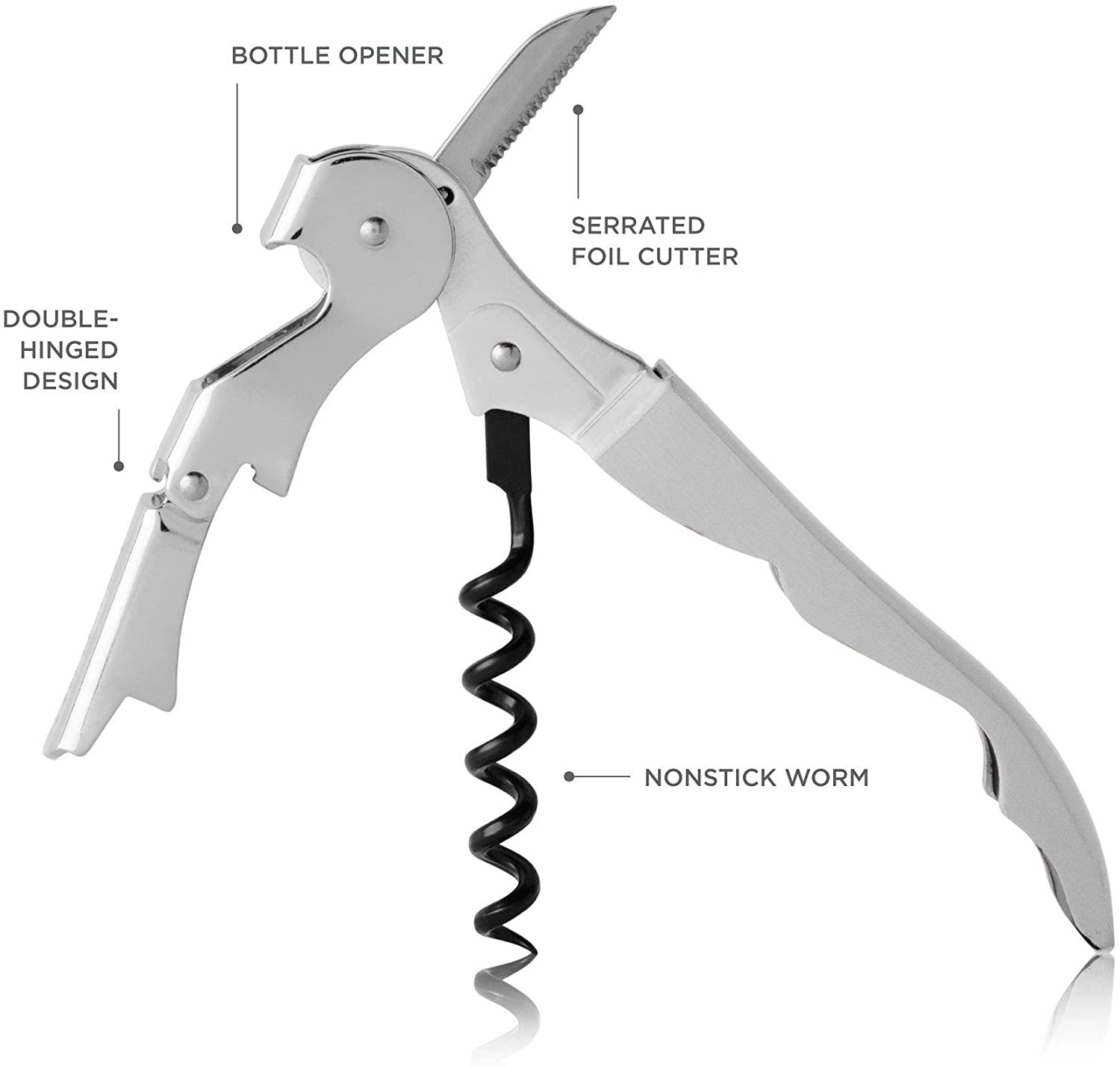
This Barcelona-based company’s corkscrew is one of the best on the market today. It’s an extremely sturdy piece of equipment and features a foldable jagged blade meant for cutting through the foil, a Teflon-based screw (the worm), and a double-hinged lever made from nickel. One of the major advantages of this corkscrew is that it works on both synthetic and natural corks.
The Pulltap’s corkscrew is extremely durable and reliable. According to Beverage Manager Wael Deek, the Pulltap’s corkscrew ensures that a bottle of wine opens cleanly without breaking and making a mess. Sommeliers and wine professionals swear by this product, lauding it for its “two-step construction”, meaning you rarely risk a cork breaking.
If you’re looking for a superior-quality corkscrew, you can’t go wrong with the Waiter’s corkscrew from Pulltap.
Laguiole En Aubrac Solid Horn Waiter’s Corkscrew
If you’re looking for an extremely durable and portable corkscrew, then the Laguiole En Aubrac Waiter’s Corkscrew is a great option. This corkscrew features an in-built knife that helps to cut the capsule on a bottle of wine. The corkscrew works well even if you want to crack open a bottle of beer.
Now, the Laguiole En Aubrac isn’t necessarily a cheap corkscrew. It’s extremely fancy and is fit for impressing guests or as an exquisite gift for your wine expert friend! It’s a tried-and-tested brand that is reputed for its superior quality items, with this corkscrew standing at the top of the roster. The gift box and ebony storage also add an elegant touch to this charming piece!
Secura Stainless Steel Wine Opener
Passionate wine lovers or enophiles don’t necessarily select electric corkscrews over organic ones. But electric corkscrews do make for a fine addition to your home bar and can help people who otherwise may struggle to de- cork their wine.
Besides, electric wine openers are far more comfortable and easy to use, especially for people who aren’t comfortable with using a wine key, winged corkscrews, lever systems, or other such manual corkscrews.
The Secura Wine Opener is a rechargeable stainless steel wine opener that features a charging base and foil cutter. Foil cutters are great accessories to have irrespective of the type of corkscrew. The Secura can remove close to 30 corks on a single charge, making it a perfect tool for large events.
The model also features an in-built LED light system that helps the user to see the cork with ease. The cork comes out smoothly and quickly in comparison to a traditional corkscrew. Remember to apply ample pressure on the opener, or the device will simply rotate and not loosen the cork.
OXO Vertical Corkscrew with Removable Foil Cutter
The OXO Vertical Corkscrew is a sleek and sturdy lever-style corkscrew that makes a perfect substitute for traditional corkscrews. If you’re someone who hates the hassle of spending extra time removing a cork, then lever-corkscrews like the OXO are made for you.
OXO’s Vertical Corkscrew comes with a classy removable foil cutter, die-cast zinc handle, and a non-stick screw or worm. This means that the OXO works beautifully with both synthetic and organic corks. The corkscrew is quite easy to use and requires no extra physical movements to remove the cork. Plus, the exquisite and smart design makes the corkscrew easy on the eyes.
RBT Winged Corkscrew
Winged corkscrews have a reputation for being quite flimsy as their arms can break or go rogue while opening a bottle of wine. Not the RBT Winged Corkscrew. This corkscrew is made of extremely durable materials and is quite aesthetic and functional compared to its competitors.
The RBT comes with superior leverage that aids in opening the bottle with ease. Moreover, the RBT corkscrew is extremely easy to operate, primarily because of its slip ring and anti-rotation feature. Built using matt black plastic and brass-coated stainless steel, the RBT is a much-required tool for opening your wine bottles with ease.
True Truetap Waiter’s Corkscrew
If you’re looking for a corkscrew cheaper than the Pulltap, go for the True Truetap Corkscrew. The Truetap offers almost all the same convenience of the Pulltap — compact size, jagged foil cutters, non-stick worms, and a double-hinged motif. The main difference between these two corkscrews is the price, with critics praising the Truetap for what it offers at its given price.
The Truetap Corkscrew is an amazing option if you’re looking to purchase corkscrews in bulk for events, gifts, or simply to keep a spare corkscrew at home. There have, however, been some complaints that the Truetap requires a considerable amount of force to be applied while opening and closing the corkscrew. But the corkscrew loosens with prolonged use.
Monopol Westmark Germany
If you have an older bottle of wine at home, then you need to have the right instruments to open the bottle. The reason being, older corks tend to become fragile and brittle with time. So, if you want to avoid bits and pieces of the cork falling into your wine, you’ll need the right tool. This is where the Monopol Westmark two-prong cork puller comes in.
A double-pronged steel corkscrew manufactured with German Steel and topped off with a five-year warranty. This moderately priced and sleek instrument is crafted to remove the trickiest corks safely. The corkscrew has two prongs that slide down on both sides of the cork and work in harmony to remove the cork.
The Monopol Westmark two-prong cork puller is perfect for opening older wine bottles and a great option for gifting to a wine enthusiast!
Wine Enthusiast Legacy Corkscrew
If you like a little flamboyance and extravagance in your life, the Wine Enthusiast Legacy Corkscrew is sure to provide that for you. If you didn’t already know, corkscrews can be used as display pieces while being fully functional, and that is exactly what the Wine Enthusiast Legacy does.
Manufactured by the reputed superior-quality brand, The Legacy Corkscrew collection comes with the corkscrew fitted on a matching stand and a beautiful black marble handle. You can either purchase these items separately or just purchase the entire set. This particular model sports a smooth worm and pewter-finish corkscrew that’s designed to work on organic and synthetic corks.
You can also monogram the black marble handle if you intend to gift it to someone. Critics have given high praises to The Legacy Corkscrew, with some even describing the piece as a work of art.
Coravin Model Two
If you’re not familiar with traditional corkscrews, there are chances you might fumble while opening a bottle of wine, causing a broken cork or even a broken bottle. However, the Coravin is an easy-to-use corkscrew that preserves and pours the wine perfectly. According to the owner of the Empire State South, Hugh Acheson, the Coravin has been nothing short of a boon in his kitchen.
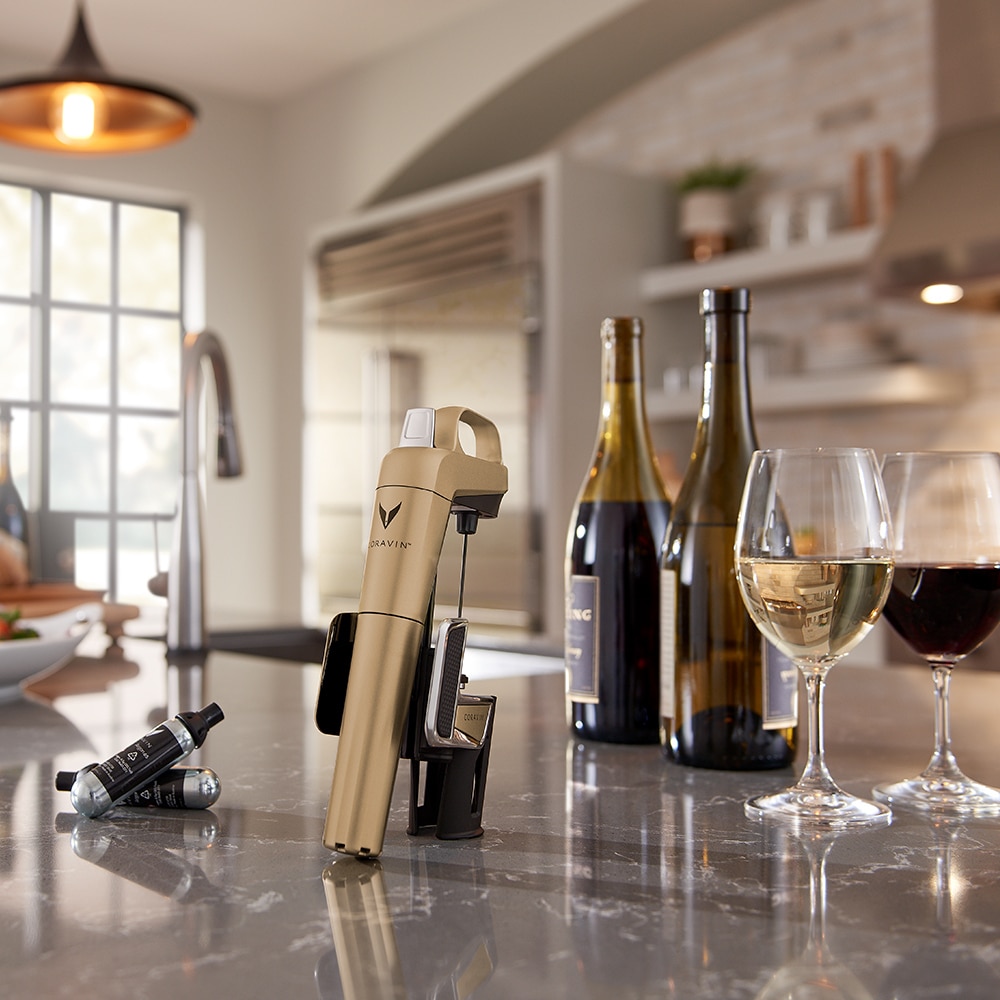
Most corkscrews end up removing the cork entirely. But the Coravin electric corkscrew is fitted with a Teflon-finish needle that pushes through the cork and allows the user to serve one glass at a time. This means you can serve a glass of wine without airing the entire bottle. This system is extremely helpful, especially if you want to cherish and preserve bottles for a long time.
Viski Belmont Signature Corkscrew
If you’re looking for a sleek and superior-quality corkscrew, you might want to try the Viski Belmont Signature Corkscrew. The awe-inspiring aesthetic of this corkscrew makes it an amazing gift for wine connoisseurs.
Apart from its stellar looks, the corkscrew is double-hinged and has a sharp, solid knife that removes foil smoothly. Available in 3 elegant colors, black, gold, and rose gold, the corkscrew is easy to use and has a 5-turn worm and sleek leverage system to help you remove the cork within seconds.
The Viski Belmont is crafted with an ergonomic design that settles itself comfortably in the palm of your hand. The gold finish over the body also allows the hinges to function smoothly.
Frequently Asked Questions
Is a Corkscrew Also a Bottle Opener?
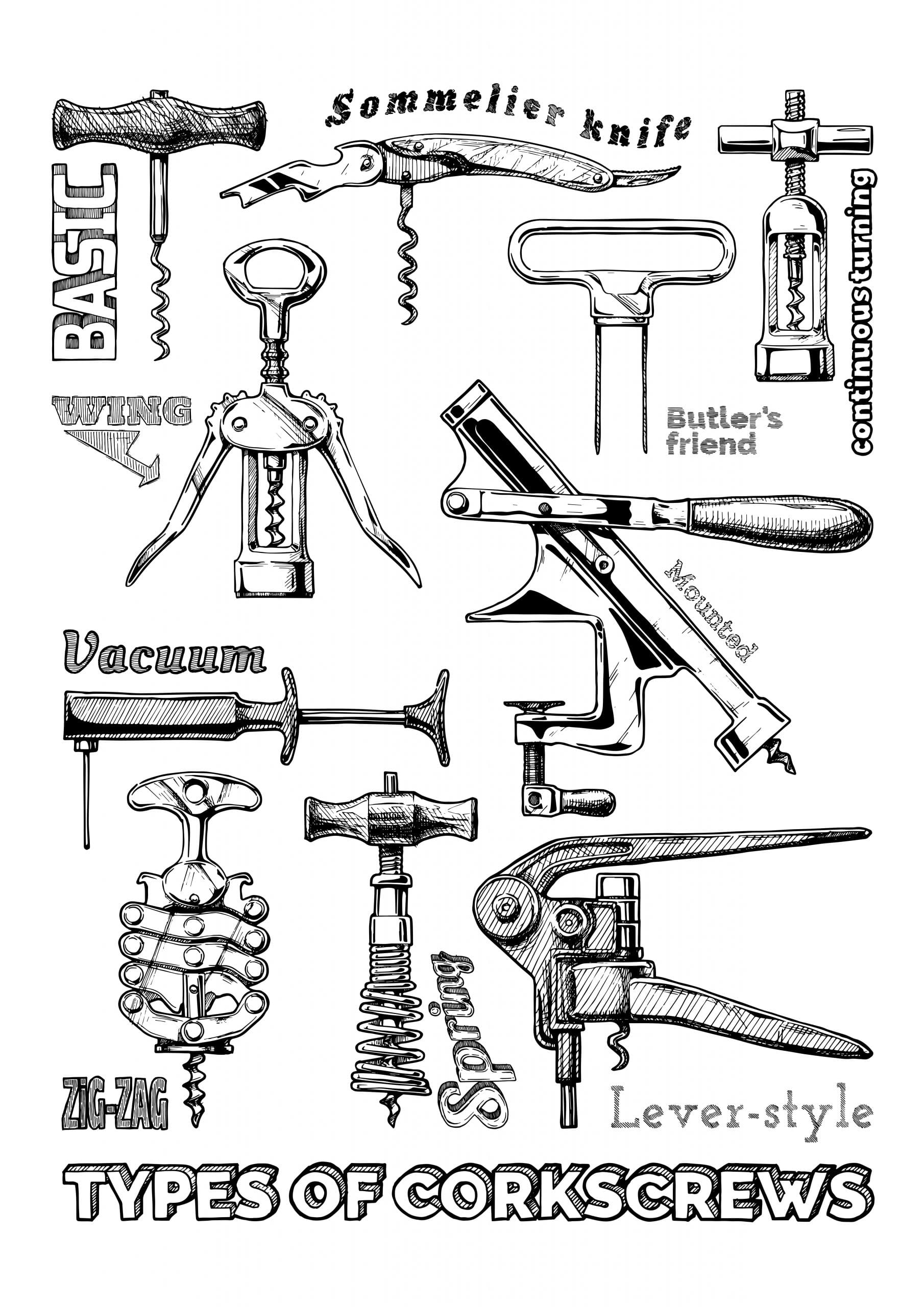
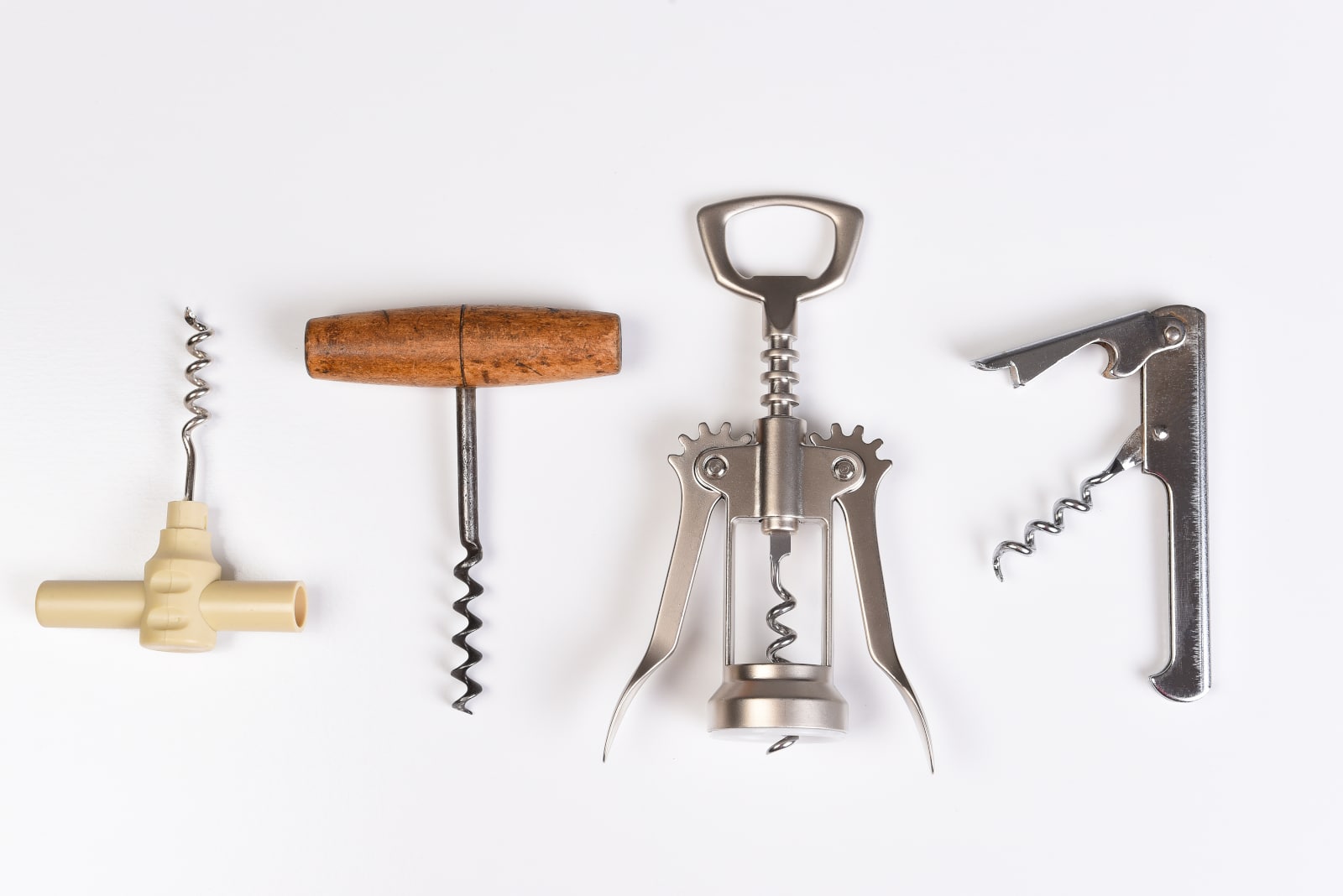
No, not all corkscrews are bottle openers. However, a sommelier knife, commonly known as waiter’s friend, often has a bottle opener attached to it. It is built with extending arms to cushion against the mouth of the bottle while removing the cork.
What Is the Best Type of Corkscrew?
The best type of corkscrew is the waiter’s corkscrew. It is the best model available for removing corks and is made with the sturdiest and most reliable design. It is also easier to use than a winged or lever corkscrew and can be stored with ease in comparison to its counterparts.
What Corkscrews Do Sommeliers Use?
Most sommeliers and wine pros use the waiter’s corkscrew, commonly known as a wine key. It’s an amazing instrument and is still considered to be the best corkscrew in the market. Waiter’s corkscrews typically feature double-hinged levers and a knife to cut the foil.
How Do You Use a Wine Opener?
Start by procuring a good-quality wine key. Once you have your wine opener, use the built-in knife to remove the foil off the wine bottle. Remember to cut a little below the wine bottle’s opening. Next, twist the corkscrew into your bottle’s cork with the handle open. Remember to not push the corkscrew all the way through the cork; it’ll be tougher removing it if you do. Fold the wine opener so you can place the leverage step on the lip of the bottle. Then wrap your free hand around the bottleneck, holding the leverage step in place. Slowly start to pull in an upward motion away from the bottle. With the cork halfway out, re-position to the second leverage step. Lastly, gently pull out the cork and pour yourself a glass of wine!
What Is the Corkscrew Rule?
The corkscrew rule has nothing to do with wine! It’s a method for remembering field directions in physics. When turning a corkscrew (not a left-handed one!) into a cork, the clockwise movement demonstrates field motion and the tip of the worm moving into the cork shows the direction of current within that field. Or something like that – check with a physics professor or teenager!
How Do You Use a Corkscrew With Arms?
Start by cutting the foil using the in-built knife, and cut the foil around the neck of the wine bottle. Next, insert the corkscrew right in the middle of the cork and twist the lever to push the worm further into the cork. You’ll notice that the arms of the corkscrew have risen. Once that happens, push down on the arms and pull the cork out simultaneously.
What Is the Difference Between a Wine Key and a Corkscrew?
The primary difference between both these instruments is that a wine key features a lever. This allows you to rest the key on the bottle while pulling out the cork. A wine key also requires less strength than a corkscrew.
What Is a Winged Corkscrew?
Winged corkscrews are one of the most popular kinds of corkscrews. They’re easier to use primarily because they add the use of an extra lever. Moreover, winged corkscrews give the user an arm on each side, reducing your use of strength and allowing you not to fret over angling anything perfectly.
How Does a Rabbit Corkscrew Work?
Rabbit corkscrews are mechanized machines that reduce extensive pulling and twisting on your part. All you need to do is hold a pair of handles and pull a lever. Opening a wine bottle with rabbit corkscrews is easier and faster than using traditional wine openers.
When Was the Corkscrew Patented?
English Reverend Samuel Henshall filed the first official corkscrew patent in 1795. To make a sturdier fit with the cork, he added a flat metal button to the helix of the corkscrew.
Final Thoughts
Corkscrews are a vital addition to your home bar. Not purchasing the right kind of wine opener can ruin your experience with the beverage. Hopefully, this comprehensive list of the 10 best corkscrews can help you choose the one that’s just right for you!