What Is Cinsaut?
Cinsaut (or Cinsault) is a dark-skinned grape varietal with a red hue traditionally used as part of the Southern Rhone blend, alongside Grenache, Syrah, and Mourvedre. That said, Cinsaut is produced as a single-varietal wine but rarely. It usually appears as a rosé expression and a light, highly aromatic, and refreshing wine.
Cinsaut grows for centuries in southern France. It is one of the permitted grape varieties in the renowned Châteauneuf-du-Pape blend, which also the largest of all the crus in the Rhône Valley. Some of the other permitted grapes are Counoise, Grenache Noir, Mourvèdre, Muscardin, Piquepoul Noir, Syrah, Terret Noir, and Vaccarèse.
Apart from France, Cinsaut vines were cultivated in the former French colonies of Algeria, Lebanon, Tunisia, and North Africa. Even though the production has decreased since the independence of those nations from the French Empire, in Morroco, Cinsaut remains the leading grape variety in production levels. On top of that, Cinsaut grows successful in sun-drenched countries because it is drought-and-heat-tolerant. And it can easily hold water. So, constant irrigation is not a necessity—a relief for grape-growers.
As a last note, Cinsaut was crossed with Pinot Noir to create South Africa’s star grape variety, Pinotage. In fact, it has managed to completely overshadow Cinsaut in Western Cape, with most South African grape growers favoring Pinotage vines.
Cinsaut produces wines low in tannin but highly aromatic. For this reason, winemakers use Cinsaut to contribute perfume in red blends. Sample aromas of Cinsaut are strawberry and cherry. And the flavor descriptors are raspberry, plum, peach, nectarine, pomegranate, and cardamom. Generally, Cinsaut’s characteristics are similar to Grenache. Both varietals share the same personality and nature. Moreover, Cinsaut is prone to trunk diseases. Mildew diseases also are common in damp conditions, such as in Southern France, where rainfalls are the norm.
What Color Is Cinsaut?
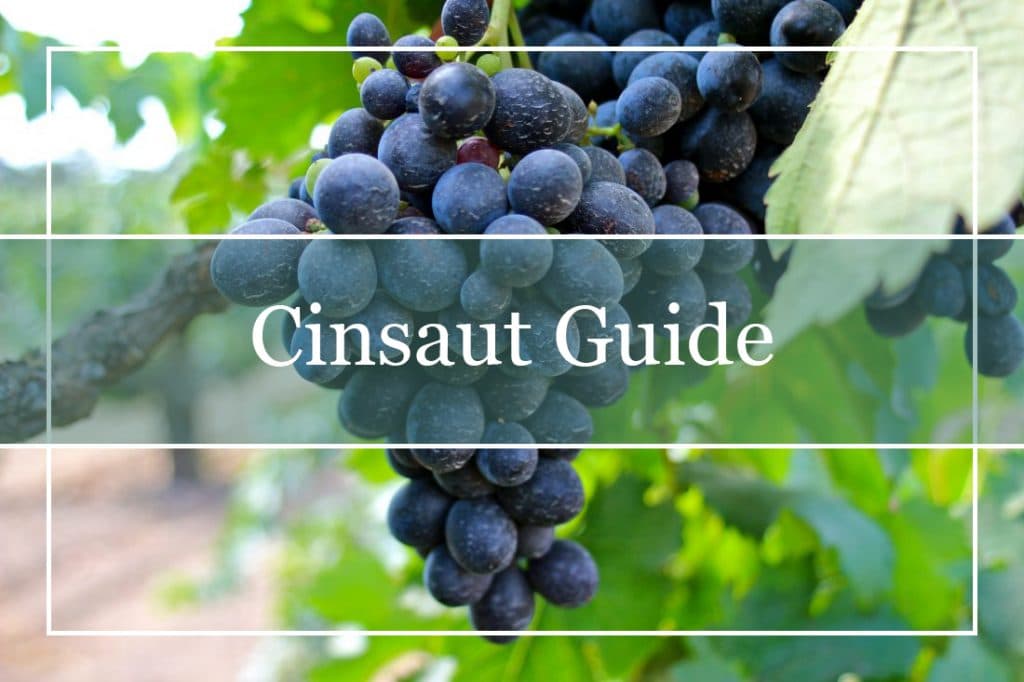
Cinsaut is a black wine grape varietal used to produced red wine. It belongs to the Vitis vinifera species, which is the main Eurasian grape variety. It produces nearly all the grapes used in winemaking and has been used to make wine for thousands of years. Until véraison and berry ripening, Cinsaut grapes are green and feel hard at the touch. However, véraison period signals the point at which the grapes begin to ripen. The grapes’ skin changes color, with Cinsaut color turning first red and then purple.
Between véraison and harvest, grapes grow and swell with water. During ripening, grape sugar levels rise, and acidity levels drop. Color pigments and flavor components accumulate, and tannins develop. The result is a lovely, rich-looking vineyard.
What Does Cinsaut Mean?
The first known use of Cinsaut was in 1945. Since then, it meant a grape variety. The word Cinsaut is French, earlier known as Cinsaut or Cinq-Saou, a borrow from Occitan of Languedoc cinsau, sinsau. It remains uncertain if the Cinsaut word is attested before the nineteenth century, even though it was cultivated in an Algiers plan nursery in 1850. Sinsau appears in a list of grape varieties in the Occitan poem La Manideta, by auteur and author Felibre Antoine Roux (1842-1915).
How to Pronounce Cinsaut?
Cinsaut pronunciation might be kind of challenging to non-native French speakers. However, it is crucial to pronounce a wine’s or varietal’s name currently during a wine tasting—it saves from embarrassment. On that note, there are many audio or video examples online on how to pronounce Cinsaut. There are two syllables in the world. Here is how Cinsaut looks phonetically:
san-ˌsō.
Keep in mind that there is a slight emphasis on the first syllable.
Where Does Cinsaut Come From?
Cinsaut originates from the South of France. It is super popular in that region because it is drought-resistant and tends to give high yields, making it an ideal variety to cultivate in the hot and dry climate Mediterranean climate of Southern France.
Cinsaut is used as a minor red blender in the famous Châteauneuf-du-Pape blend of the Rhône Valley. But it is also extensively cultivated in other areas of Southern France such as Bandol and Languedoc Roussillon. On top of that, Cinsaut is popular as a blending grape in Côtes du Rhône, Tavel, Gigondas, and Rhône Valley’s appelations: Costières de Nîmes, Grignan-Les Adhemar, Ventoux, Côtes du Luberon.
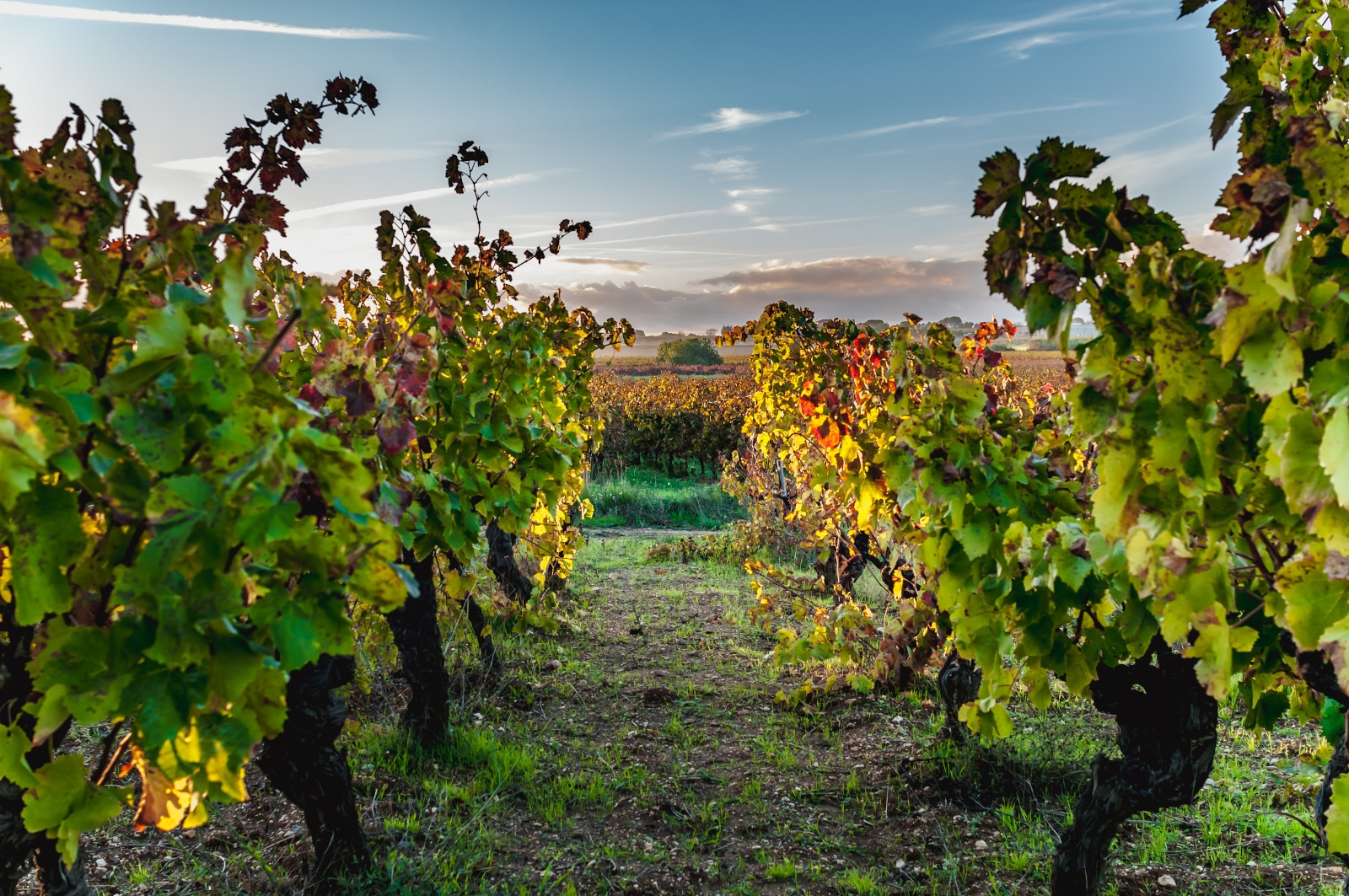
Outside France, Cinsaut is widely planted in Algeria, Australia, Corsica, Lebanon, Morroco, Tunisia, and South Africa. In 1925, Cinsaut crossed with Pinot Noir to create South Africa’s signature grape variety Pinotage.
In the United States, Cinsaut was exported to California in the Gold Rush in the 1850s. Back then, it was known as Black Malvoisie. Again, it was used for blending with other, more structured varietals. Today, in California, Cinsaut is blended with Zinfandel.
What Kind of Wine Is Cinsaut?
Cinsaut is a predominantly red blender. That means that seldomly winemakers produce one-hundred-percent Cinsaut wine, except for rosé. Used almost entirely in Châteauneuf-du-Pape blends, Cinsaut contributes fresh red fruit aromas and elegancy.
Châteauneuf-du-Pape is from Mourvèdre and Grenache, varietals that give meaty, full-bodied, and richly texture wines. Winemakers choose Cinsaut to counterbalance the flavor intensity and add delicate notes to the final wine.
As a rosé wine, Cinsaut is crisp, intensely aromatic, and refreshing. Rosé Cinsaut is primarily grown in Languedoc-Roussillon in South France. There, it classifies as a Pays d’Oc wine. Pays d’Oc is a classification of table wines due to high production and yields and low complexity.
Moreover, terroir does not play significant importance in forming Cinsaut character, unlike others in other varietals. Expect to find Cinsaut vines planted on flat grounds without elevation and a slight inclination towards the sun to increase their sugar concentration as much as possible.
Is Cinsaut Dry or Sweet?
Since Cinsaut is used as a blending component in other wines, it is hard to pin it down to a dry or sweet profile. For the most part, it helps in the production of dry red wines. It tends to have high acid levels, low tannins, and aromatic intensity, adding refreshing qualities to blends.
What Does Cinsaut Taste Like?
As a single-varietal wine, Cinsaut tasting notes highlight freshness and brightness. Vivid red fruits like strawberry and cherry define the Cinsaut aromas, complemented by pepper and baking spice notes. About Cinsaut taste, raspberry, red currant, and peach flavors blend with pomegranate and cardamom touches. On top of that, Cinsaut wines have crisp, zippy acidity, a light-to-medium texture and body, and lower than normal alcohol levels. As a consequence, the Cinsaut flavor profile is savory and mouthwatering.
Cinsaut is always invigorating, inviting, and unquestionably elegant. It seems to taste like summertime in a glass—at least when it comes to Provençal rosés. So, open it under the warmth of Southern France sun!
How to Serve Cinsaut?
Cinsaut is best served when it is young. It cannot benefit from aging or extended maturation. If you purchased a Cinsaut-only wine, whether red or rosé, consume it within six months from the date of bottling or earlier. The longer it stays in the pantry, the decline of its vivid and bright red fruit aromas and flavors decreases. And you do not want to do that.
A red Cinsaut can technically be served slightly chilled. In this way, it is more enjoyable than uncorking it at room temperature like a Cabernet Sauvignon. The perfect temperature to serve Cinsaut is fifty to fifty-four degrees Fahrenheit (ten to thirteen degrees Celsius). The flavors will be enhanced, tasting delightful. Wine enthusiasts also are free to pour the wine into medium-sized white wine glasses. That happens because the large surface provides the wine with the necessary aeration, so the Cinsaut’s savory nature elevates.
As to the rosé Cinsaut examples, wine fans have to place the bottle in the fridge at least four or five hours before serving at fifty-five to fifty degrees Fahrenheit (seven to ten degrees Celsius). They should still pour the wine into standard white-wine glasses or tulip glasses.
Moreover, Cinsaut has to stay cool during service. To do that, use an ice bucket or wine cooler. The bucket should be filled three-quarters full with equal quantities of ice and water so that iced water surrounds the bottle. The water can carry the heat from the bottle to melt the ice. Air acts as an insulator, and the bottle chills. Remember, though, that over-chilling overshadows flavors in wines.
How Long Should Cinsaut Breathe?
Cinsaut wines are lightweight and fruit-forward, and thus, they will not benefit from excessive aeration. Decanting them would be an option, but it is not necessary. That said, a crystal decanter will show off the pale ruby-colored appearance of Cinsaut. As an estimation, do give fifteen minutes to Cinsaut to breathe and aerate before serving.
What Food to Pair with Cinsaut?
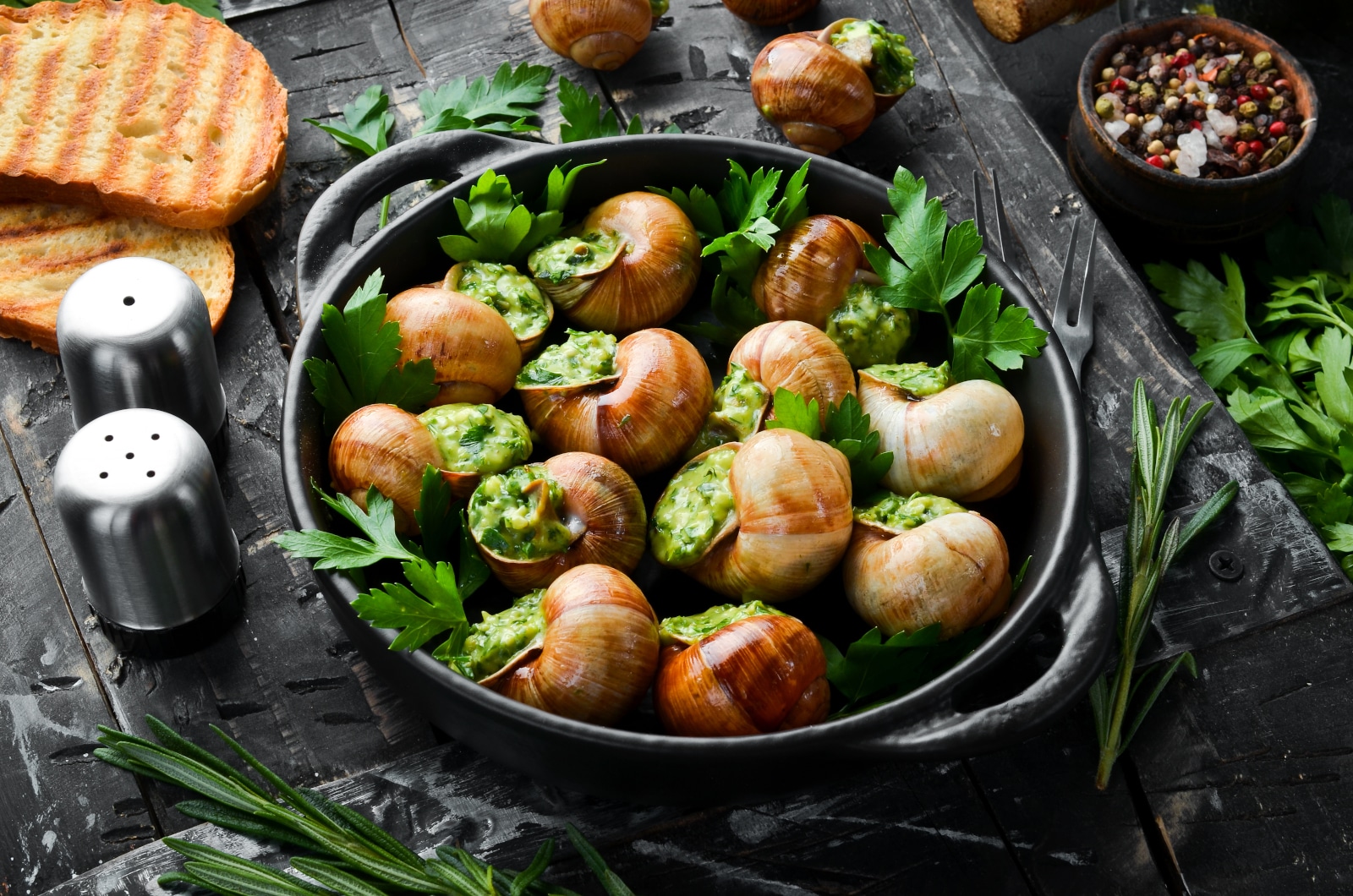
Cinsaut food pairing is not challenging, as the wine matches with a variety of foods. From sea snails (escargot) to salmon and lamb, Cinsaut is versatile and can accompany lots of different courses. Consequently, a delicious serving of snails with garlic and butter or hot smoked salmon fillets contributes highly to rosé Cinsaut’s fruity nature. Likewise, juicy Moroccan lamb with prunes and apricots pairs well with red Cinsaut. In fact, the rich texture of the lamp blends incredibly with the red currant and pepper notes of this varietal.
Feel free to pair Cinsaut also with rich foods, such as stews, roasted meat dishes, every type of Beef, Goat, Duck, Chicken, or Pork. Game meat, however, is not a great option and better to be avoided. It is slightly rough textured and requires wines with solid tannins to indicate its plush flavors.
Cinsaut Cheese Pairing
Cinsaut makes a good match with creamy and sheep milk cheeses. Try the wine with Brebisrousse d’Argental, Brie, Pecorino Toscano, Queso Manchego, Camembert, and Fiore Sardo. Pick an olive-wood cheesed board and serve the cheeses with crackers. Or use them when cooking pasta or making pizza Margarita.
If Cinsaut is served with Camembert, bake the cheese first. Sprinkle a bit of olive oil, dried basil, and a touch of honey and put it in the oven. Afterward, remove it and enjoy the ultimate cheese experience alongside a glass of invigorating Cinsaut!
How Much Alcohol Does Cinsaut Have?
As mentioned above, Cinsaut is a blending component in Châteauneuf-du-Pape blends, or it gives light rosé wines. Châteauneuf-du-Pape wines are often high in alcohol, in the range of 13-15% ABV. After all, they must be a minimum of 12.5% ABV under the appellation rules with no chaptalization allowed. Cinsaut rosés range between 12-13.5% ABV. As a consequence, Cinsaut alcohol content is relatively high. Therefore, avoid excessive consumption and enjoy the wine responsibly.
How Many Calories Are There in Cinsaut?
What increases calories in wines are alcohol and residual sugar. And since Cinsaut wines are dry, alcohol is the main contributing factor to high calories. That said, calories in Rhône blends range from 19 to 25 per serving. So, wines in which Cinsaut is part of the blend are dietary safe, making some of the most calorie-friendly beverage choices. The carbs in Cinsaut are generally low, ranging from 3 to 6 grams per glass. There are cases, though, where they seem to climb to a threateningly high level, rising to 23 grams.
Conclusion
Cinsaut is a fantastic grape variety, with a long history tracking back to the nineteenth century. Widely planted throughout Southern France, it is used as a red blender to add soft perfumed aromas of cherry and strawberry. Cinsaut is particularly suitable for rosés and fruity, easy-going reds, as well as being a participant in Rhône Valley’s prestigious Châteauneuf-du-Pape. It is similar to Grenache, but it is easier to pick by a machine during harvesting. And it withstands drought, cultivating without challenge, becoming a winemaker favorite. To sum it up, Cinsaut is the leading blender variety, contributing red fruit notes, baking spice flavors, and brisk acidity to wine blends.