
For any wine aficionado, curating their own wine collection can be a special experience. But beyond carefully selecting and buying your wines, storing them in a suitable environment plays a huge part in elevating your wine drinking experience.
So while you revel in the thrill of your impeccable wine collection, have you made arrangements to store and preserve them?
Wine can be sustained for a long time if you adopt the right methods to store them. Here’s a quick rundown on how to effectively and safely store your wine.
What Is the Best Way to Store Wine?
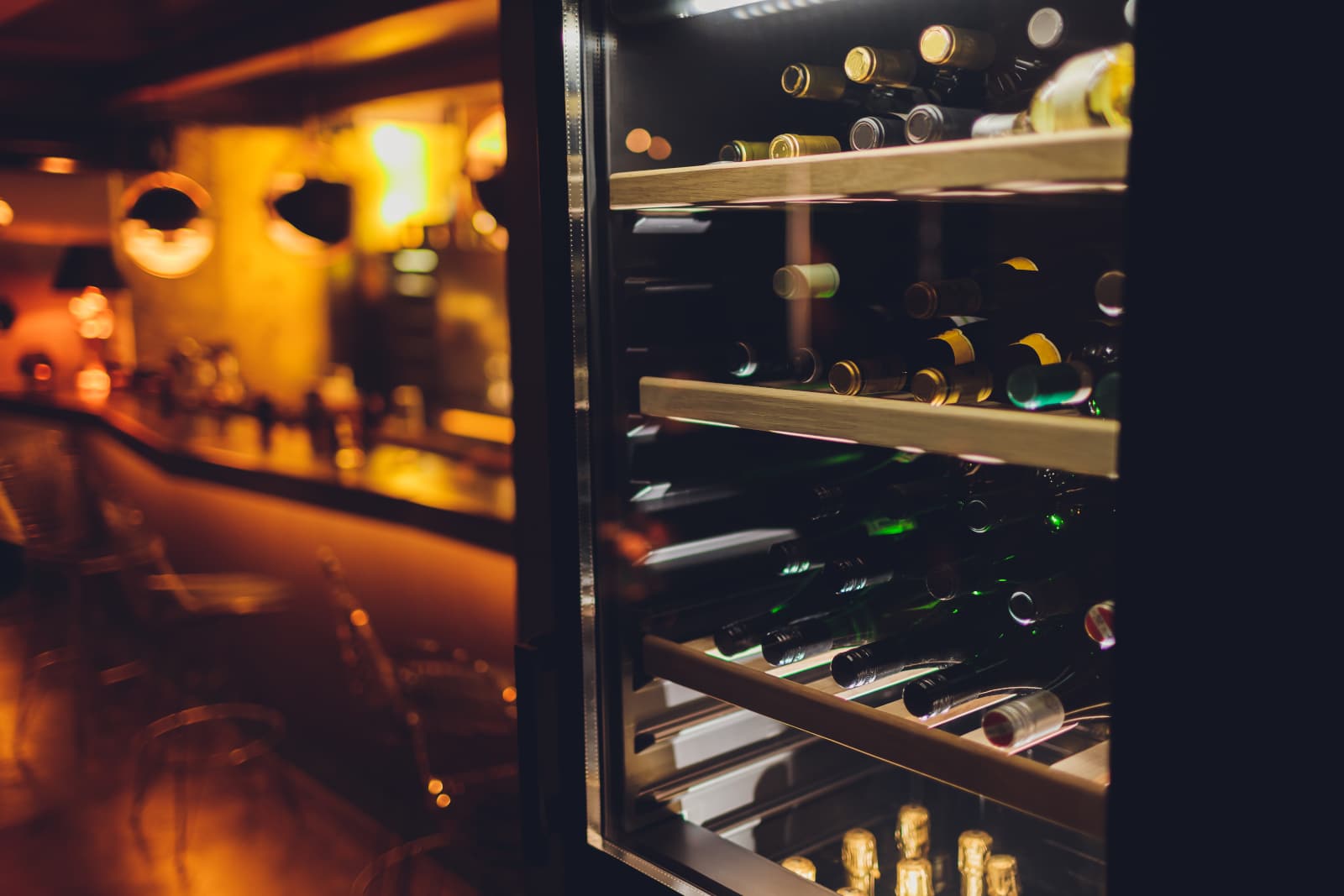
Putting away your wine bottles in a wine fridge is the most effective way to store them. Wine fridges provide a compact space and facilitate the optimum temperature and humidity requirements, maintaining the temperature range of 50-60℉ (10-15℃).
It will also help keep your wine safe from any strong odors or food flavors that you’ll find in a regular fridge.
What Is the Best Temperature to Store Wine?
Storing wine at the perfect temperature is key to maintaining its rich taste. Determining the best temperature is based on the type of wine you have.
In most cases, the ideal temperature ranges between 45℉ and 65℉, with 55℉ considered as the ideal temperature at which to store your exquisite bottles.
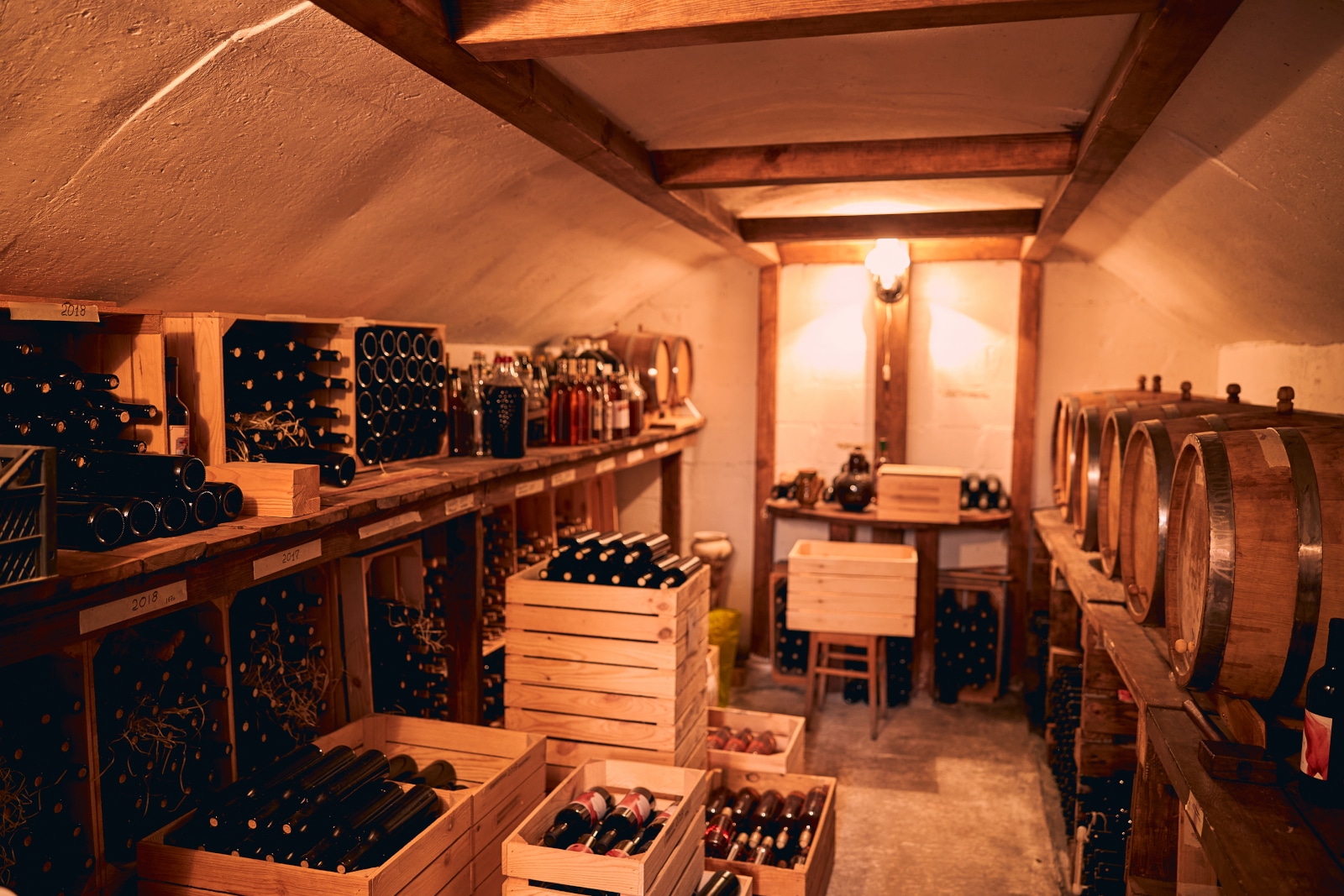
How Do You Store Wine in a Cellar?
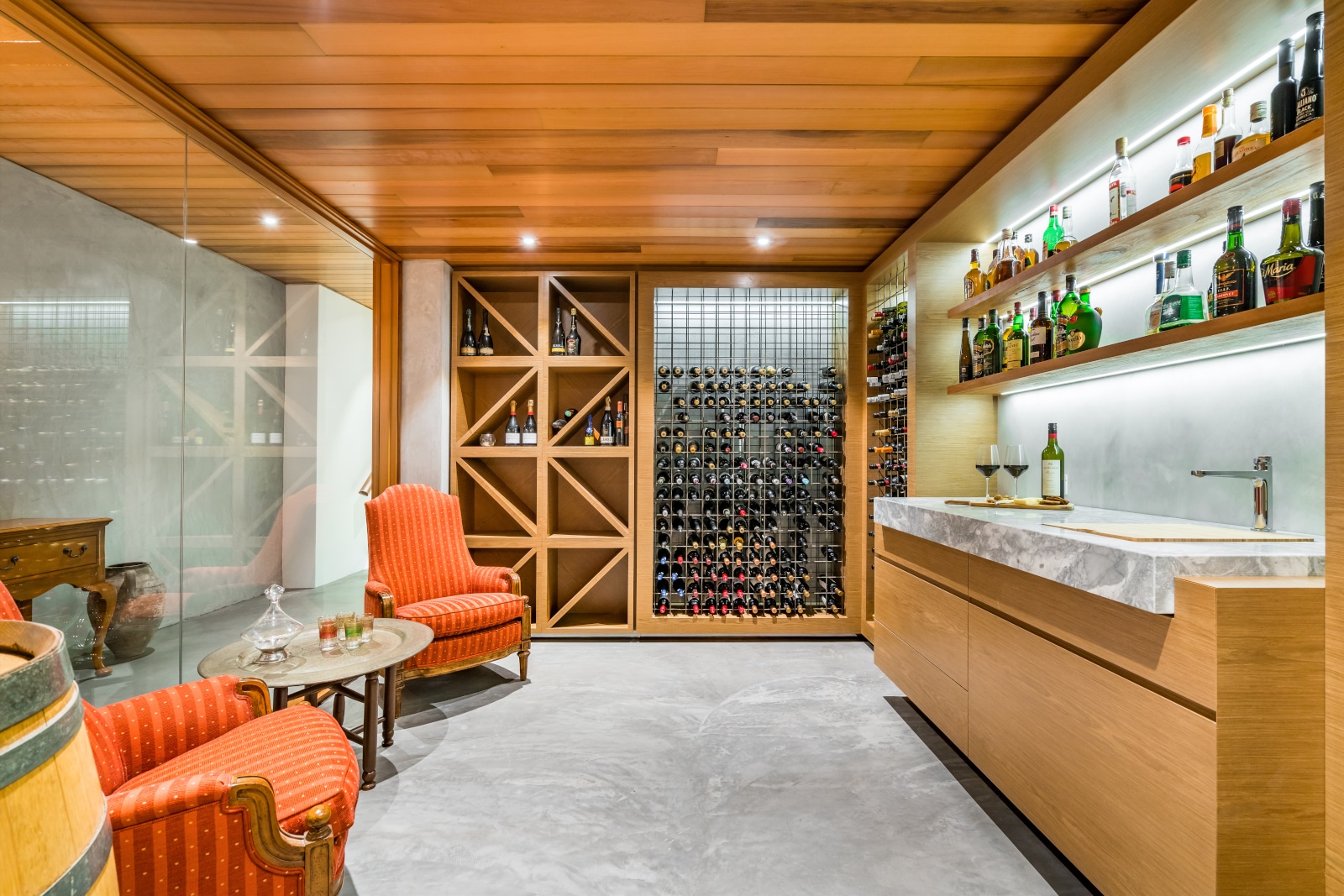
A wine cellar is a room specifically designed to store wine. Wine cellars are often regarded as a cost-effective solution for storing wines.
So what does this room do? We know that wine needs to be preserved in an ideal setting. A wine cellar provides the precise temperature and humidity in which your wine can thrive.
If you have a large collection of wines, you can organize them by vintage, or arrange the wine in the cellar based on its numeric value to exhibit a wonderful display.
Today, several wine aficionados have been constructing make-shift closet wine cellars. This allows you to store your wines for a long time.
What Is the Ideal Temperature for a Wine Cellar?
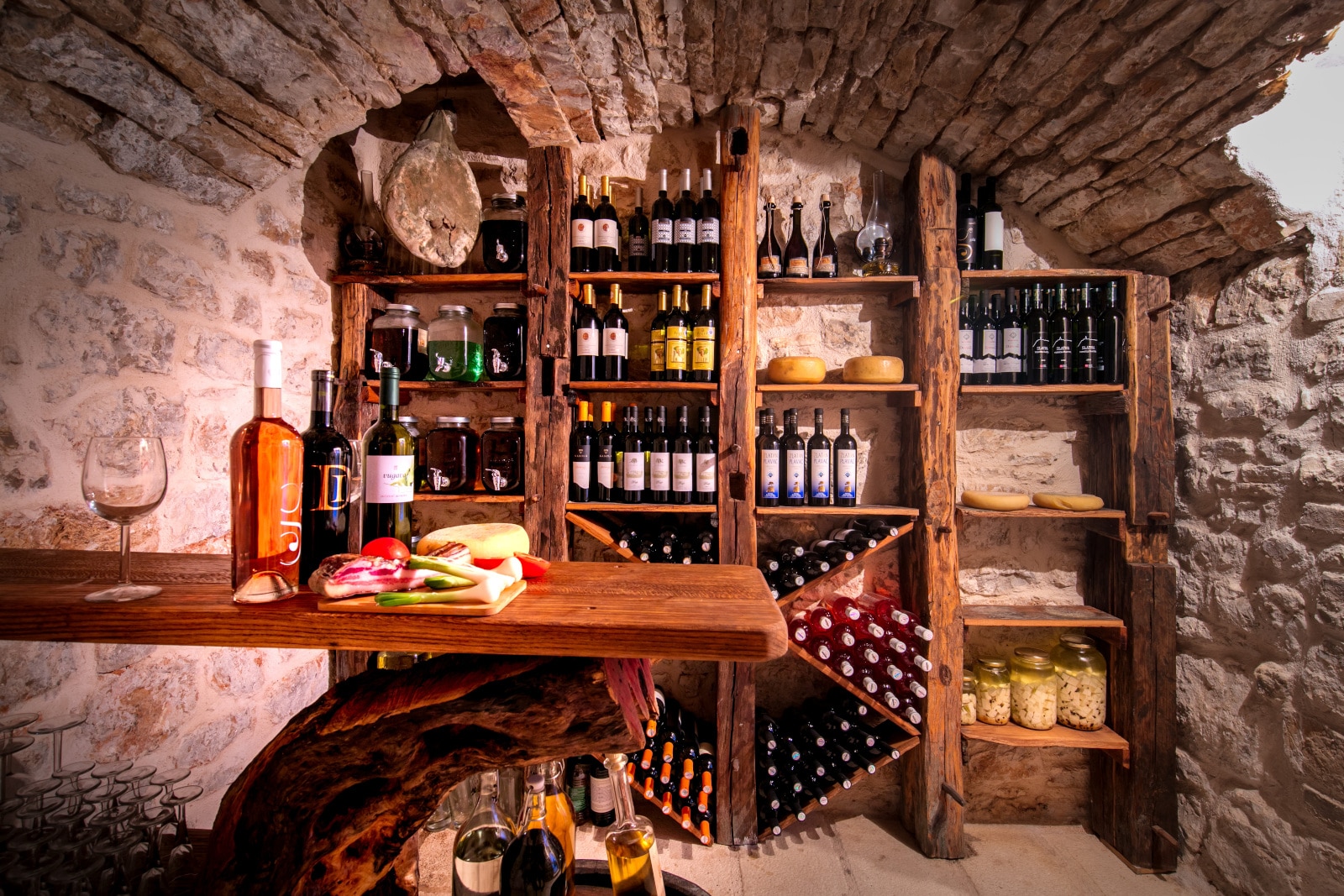
The wine cellar is designed to store your wines in the required temperature range. The optimum temperature to preserve wine in cellars should be between 55℉ and 59℉. It will ensure that the atmosphere is neither too hot nor too cold for your wine.
Does a Wine Cellar Need Ventilation?
Like any other storage unit, proper ventilation is necessary in a wine cellar. The room adjacent to the cellar is referred to as the exhaust room, and ventilation is key here. The cellar you create must be able to maintain a cool and appropriately humid atmosphere.
Wine cellars should be in 55℉–59℉ temperature range and have a relative humidity of 60-65%.
Here are some tips to create the perfect wine cellar:
- Carry out checks in the room before you decide on the place.
- A vapor barrier must be created.
- The concrete floor of the room must be sealed and the walls furred.
- When installing a door for your cellar, do a thorough check for air leaks.
- It is recommended to complete the finishing for your walls.
- Invest in a cooling system for your wine cellar.
Where Do You Store Wine Without a Cellar?
Creating and maintaining a cellar is a delicate and tedious task. In most cases, you will realize that no part of your house is suitable enough to be turned into a protective cellar. So if you don’t have access to a cellar, here are some guidelines you can follow instead, to keep your wine.
- Store it in a dark place.
- If your wine arrives in a box packaging, avoid removing the packaging. This air-tight box will protect the bottles from being affected by temperature changes.
- If you discard the box, store the wines in a unit that maintains a consistent temperature. You should look at investing in wine fridges to keep your drinks safe.
- Do not let your wines come in direct contact with exterior walls. These walls can cause the outdoor temperatures to spoil your bottles. Think on the lines of a hard-covered wardrobe, or a deep-seated storage unit to place your wines.
- Your drinks should be sustained in place with minimal movement and low foot traffic. Any kind of vibrations or noise can lead to a chemical imbalance. It can lead to your wines losing their natural sediment flow and being ruined. Once stored, refrain from changing the bottle’s positioning.
Can I Store Wine in My Basement?
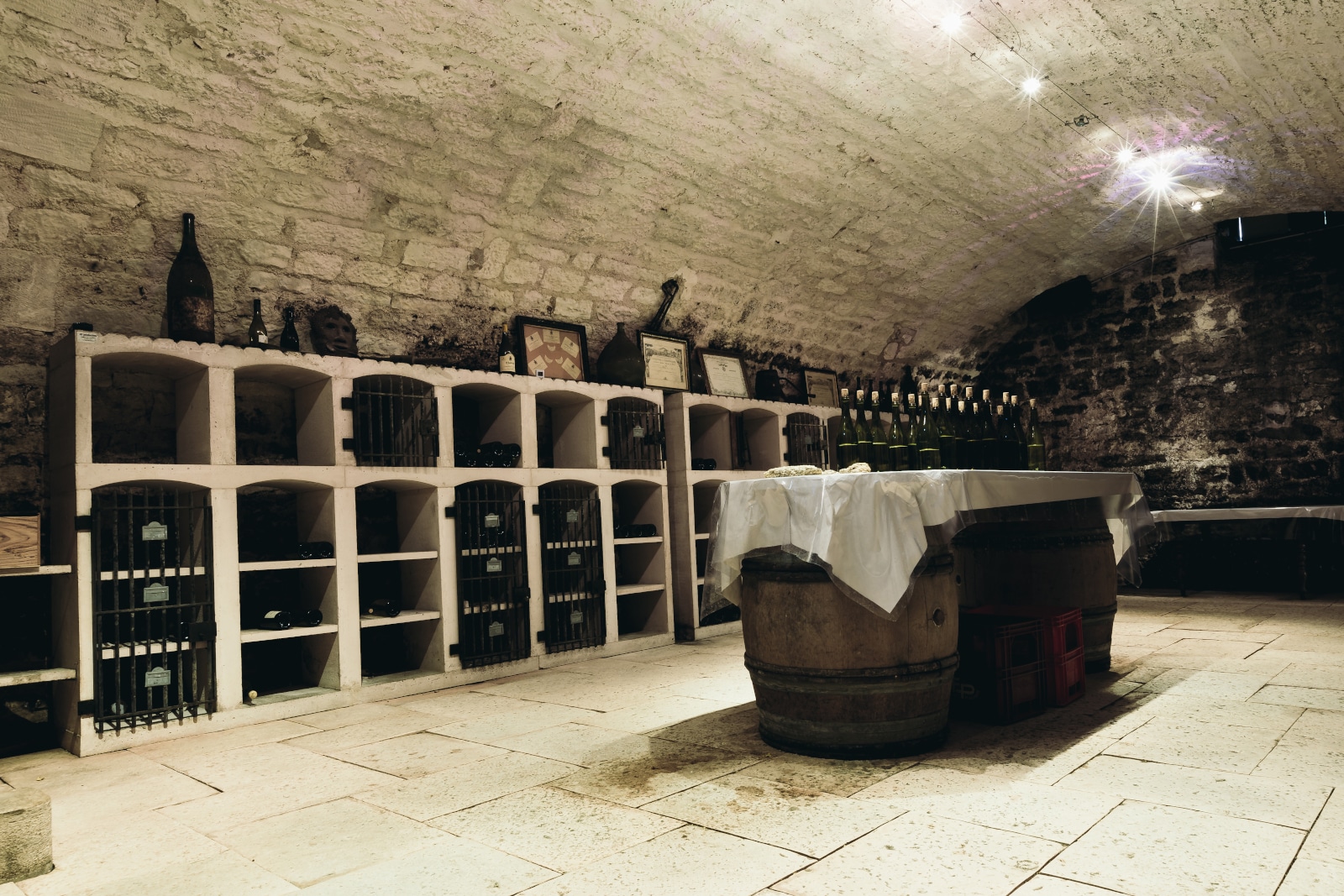
Wine poses potential perishable risks. Thus, most would naturally look at their house basements to be reinvented into cellars, assuming the dark environment to be the right choice.
Here is why you may be wrong about storing your wines in the basement.
Temperature Regulation
This is key to ensure proper wine storage. Most basements in American households lack a concrete air conditioning system, making them vulnerable to temperature changes from outside. This also makes it difficult to constantly regulate the ambiance in the basement. Not good news for your wines.
Insulation
Basements lack proper insulation for creating a stable and suitable environment for your wine bottles. While you can insulate your basements, it is extremely expensive and time-consuming.
Humidity
Basements are also easily affected by changes in humidity. Too much humidity can easily ruin the taste of your most treasured wine labels. Besides, nobody wants to deal with unwanted mold growth on their wine bottles. And too little humidity will make your wine cork dry out or become fragile, resulting in the wine oxidizing.
Odor
Basements are known to have a musty smell. This is typically the result of too much humidity or moisture in the air. There is no point in storing wine in a place that may disrupt the wine’s delicate aromas.
Can Wine Be Stored at Room Temperature?
To maintain the quality of a wine, temperature is key. The average room temperature is prone to changes. So, no, you should not be storing wine in your regular rooms.
If the place gets warmer, your wine will age faster and lose its charm. On the other hand, if your room gets too cold, the maturing process of your wine gets slowed down. Both of these situations destroy the core taste of your wine.
Are Wine Fridges Worth It?
For an ideal wine storage environment, the place in question should draw a balance between temperatures and humidity.
A wine fridge can achieve this. Wine fridges use compressors or thermoelectric energy that helps keep the wine at an optimum temperature. It also protects the wine from the harmful effects of UV rays, humidity, and vibrations.
While you may be tempted to cut down on costs and place your wine in your regular fridge, that wouldn’t be a good idea. A regular fridge typically functions between 35℉ and 38℉ and has approximately 30 percent humidity. For our wine to be safe, the temperature needs to be about 45℉ to 60℉ and the humidity at 70 to 90 percent. This inconsistency and high cooling environment of a regular fridge will hamper the organic maturation of your wine.
A wine fridge, on the other hand, can keep your bottles in an ambient state.
How Do You Store Wine Cheaply?
Don’t have a wine fridge or provisions to make a cellar? Here are some easy tips you can follow to cherish the taste of your drink for a longer time.
If your wine bottle has a cork, store the bottle horizontally on your wine rack. This position allows the cork to retain moisture, ensuring durability.
Your wines must be kept away from direct sunlight and should not be exposed to heavy vibrations. Place your wine bottles in the dark, away from any noisy electronics.
Take special care to maintain the right temperature and humidity, or as close as possible, for your wine.
Based on the type, serve the wine at a proper temperature to make the best of its flavors. Once opened, try your best to drink it all within a few days.
Can Wine Be Stored Too Cold?
The rule of thumb is to store your wines at 45℉–65℉ temperature range. But what if the temperature drops? How cold is too cold for your wine?
Technically speaking, the ideal temperature depends on the duration for which you wish to preserve your wine. If you want your wine to age naturally, extreme cold storage will hinder this process.
It is also risky to keep your wine in extremely cold temperatures for a prolonged period. It can cause the wine to freeze and expand. Wine has a freezing temperature range of 15℉ to 20℉. If the storage unit drops to this value, chances are the expanding wine could exert pressure on the cork and crack the bottle.
Why Is Wine Stored on Its Side?
Storing wines on their sides has long-term benefits.
In this position, the liquid comes in direct contact with the cork, thus preventing the cork from drying out and keeps it moist, subsequently preventing oxidation.
The force of the liquid channeling against the cork also stops excessive air from seeping into the drink, which reduces the air bubbles.
Another advantage of storing the wine horizontally is that you can decide when to pour open the wine based on the sediment formation.
Plus, storing your wine sideways occupies less space, leaving more room for new bottles!
How Long Can Wine Be Stored Upright?
How long you can store wine bottles upright usually depends on the quality and brand of the wine. But wine bottles should never be stored upright for an extended time.
Inexpensive and low-quality wines often succumb to external conditions and go bad quite fast.
However, for any wine, the standard period for which you can keep it upright is only around two to seven days. Any bottle that is kept standing for over a week is at risk of the wine going completely stale or tasting like vinegar. Safe to say, the aroma of your wine will also be lost.
Do You Refrigerate Unopened Red Wine?
Red wine should be stored at around 55℉. So when kept in a wine refrigerator or well-designed wine cellar, your work is made easy. A wine refrigerator will meet all the temperature and humidity requirements and will preserve your wine in the dark.
If you don’t have access to a wine cellar or a wine refrigerator, you can store the bottle sideways on a wine rack in a climate-controlled setting. Storing unopened red wine for a longer duration is an uncomplicated process. But once you pop open the bottle, make sure you finish the wine at the earliest.
How Long Does Red Wine Last Unopened?
This largely depends on how the wine is stored.
If you wish to increase the shelf life of a priceless Cabernet and Merlot, keep it in a cool and dark area, away from direct contact with heat or sunlight.
An unopened red wine when placed sideways in the right conditions can last in its best form for 2 to 3 years beyond the expiration date. Of course with some added effort, the quality can be retained for a much longer time, sometimes decades.
How do you know the wine has gone bad? Your red wine should be discarded if you detect an unusual odor or an odd flavor or if the wine’s color seems off.
How Long Does White Wine Last Unopened?
Similar to red wine, you can extend the shelf life of white wines, too, if you store it tactfully. An unopened white wine will hold on to its flavor and aroma for around one to two years past its expiration date.
To make the most of a white wine’s flavor, remove the white wine from the fridge a day or two before decanting.
How Cold Is Too Cold for Red Wine Storage?
Your red wine will develop a beautiful flavor when stored at a balanced temperature, between 53℉ and 57℉.
If the temperature of your storage unit is warmer than 57℉, it may escalate the aging process. On the other hand, if your red wine is kept in a place cooler than 53℉, the aroma may alter. And, as mentioned earlier, your wine will crystalize and freeze at around 20℉. It can lead to the bottle cracking or the cork popping off, thus causing the wine to oxidize.
Final Thoughts
Wine is a delicate drink. And storing and preserving wines is a cultivated art. There is an aging process that your wine undergoes over time.
So when it comes to storing wines, there is a right way and a wrong way. Storing wines at an ideal temperature and humidity is a fundamental step toward enriching the quality of your drink. We hope you are now acquainted with the optimum ways to keep your wine fresh and flavorful. Follow this guide and you will never have to worry about your wine going bad!